
Last updated September 23, 2026
Free visual inspection and a written scope of work before any mitigation begins - photos, moisture readings, and drying logs go in your claim file
The scope we write is the scope we bill. Anything new gets shown to you, in writing, before we touch it.
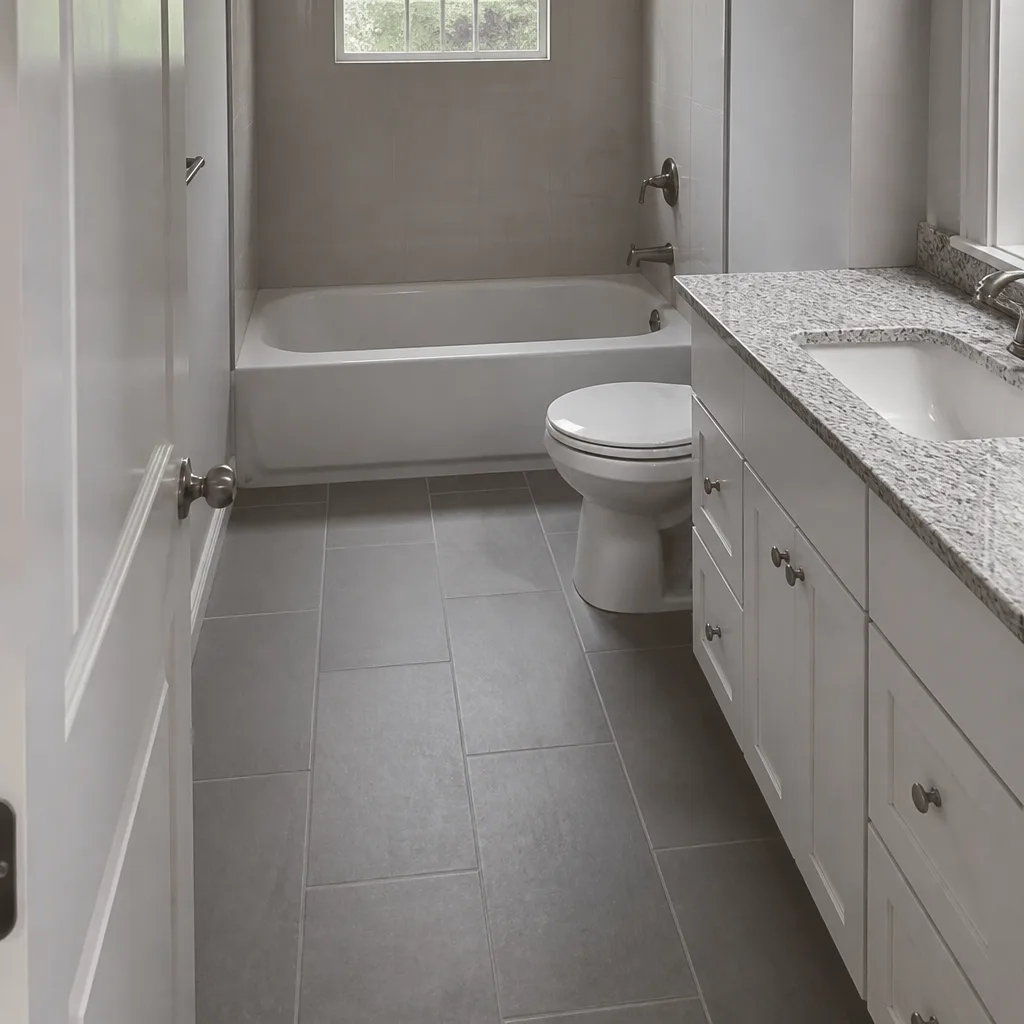
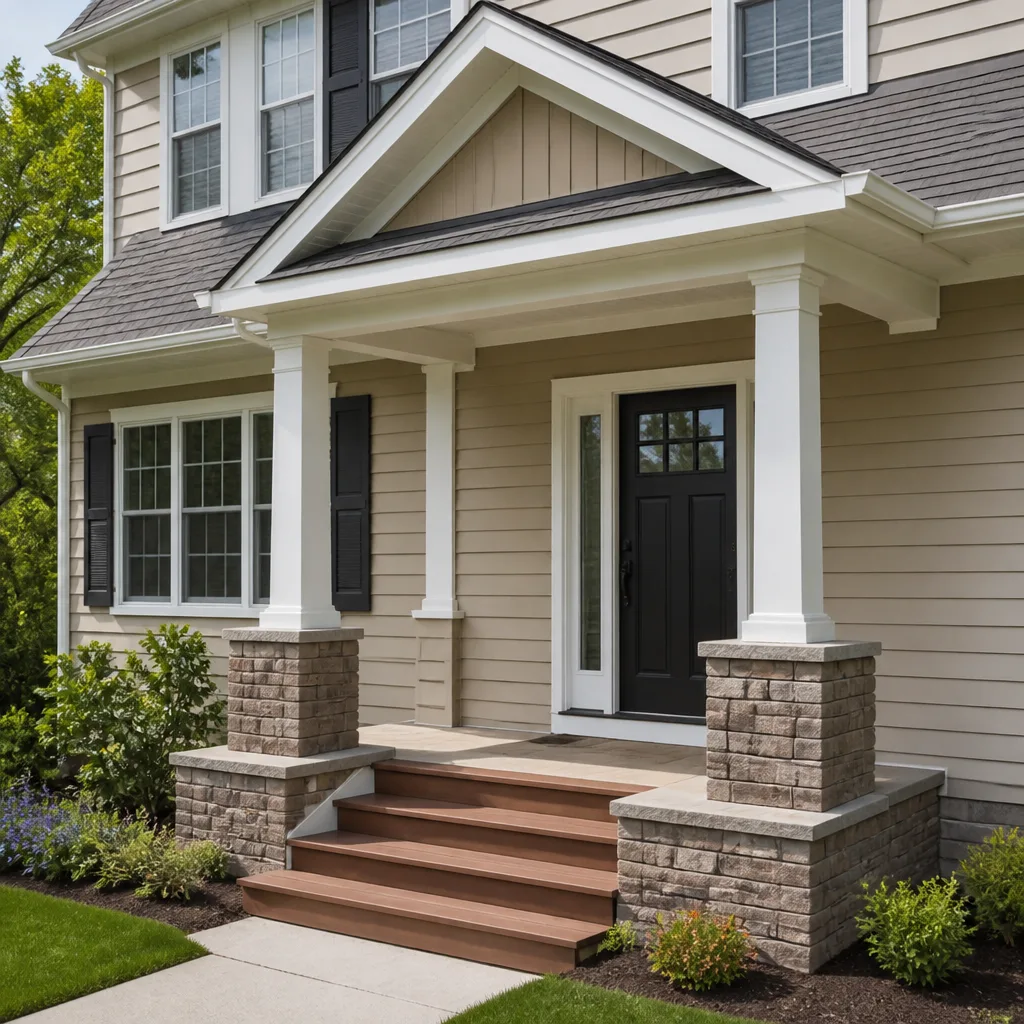
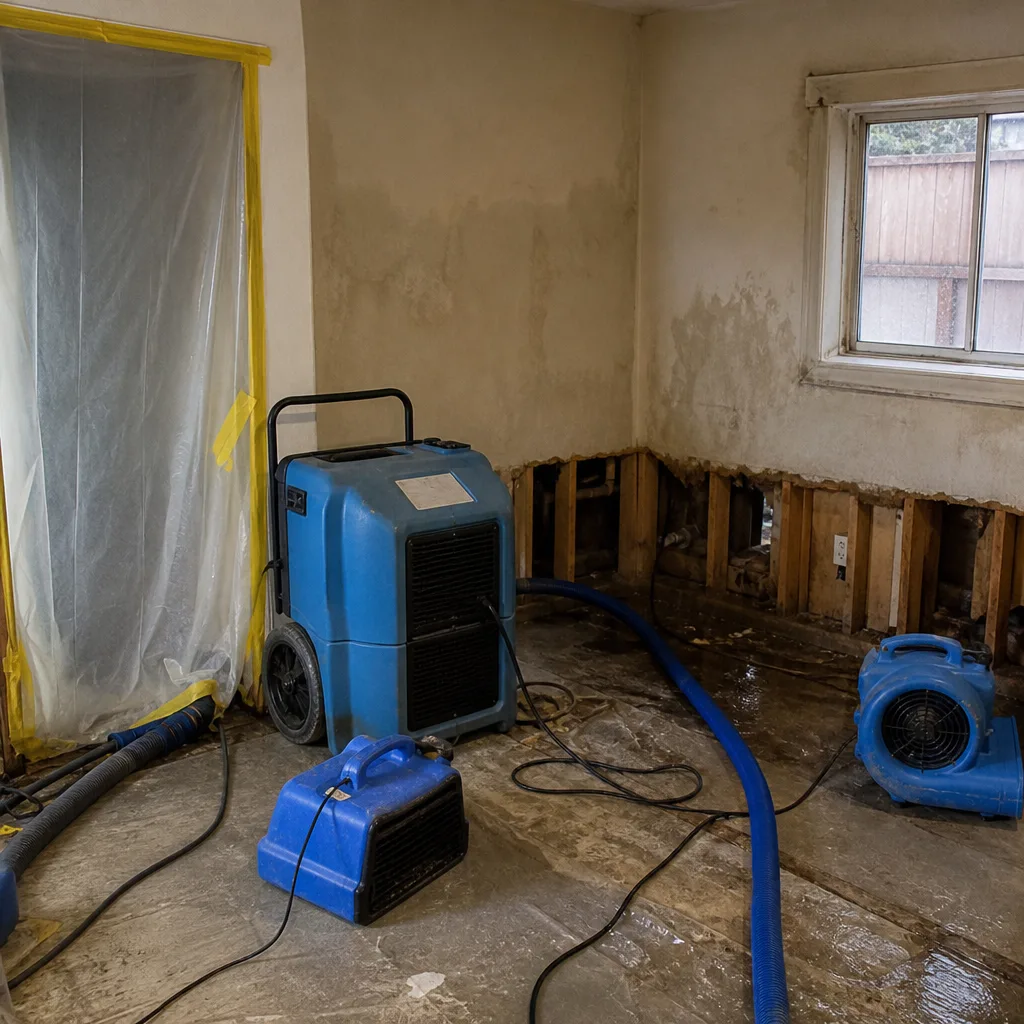 Before
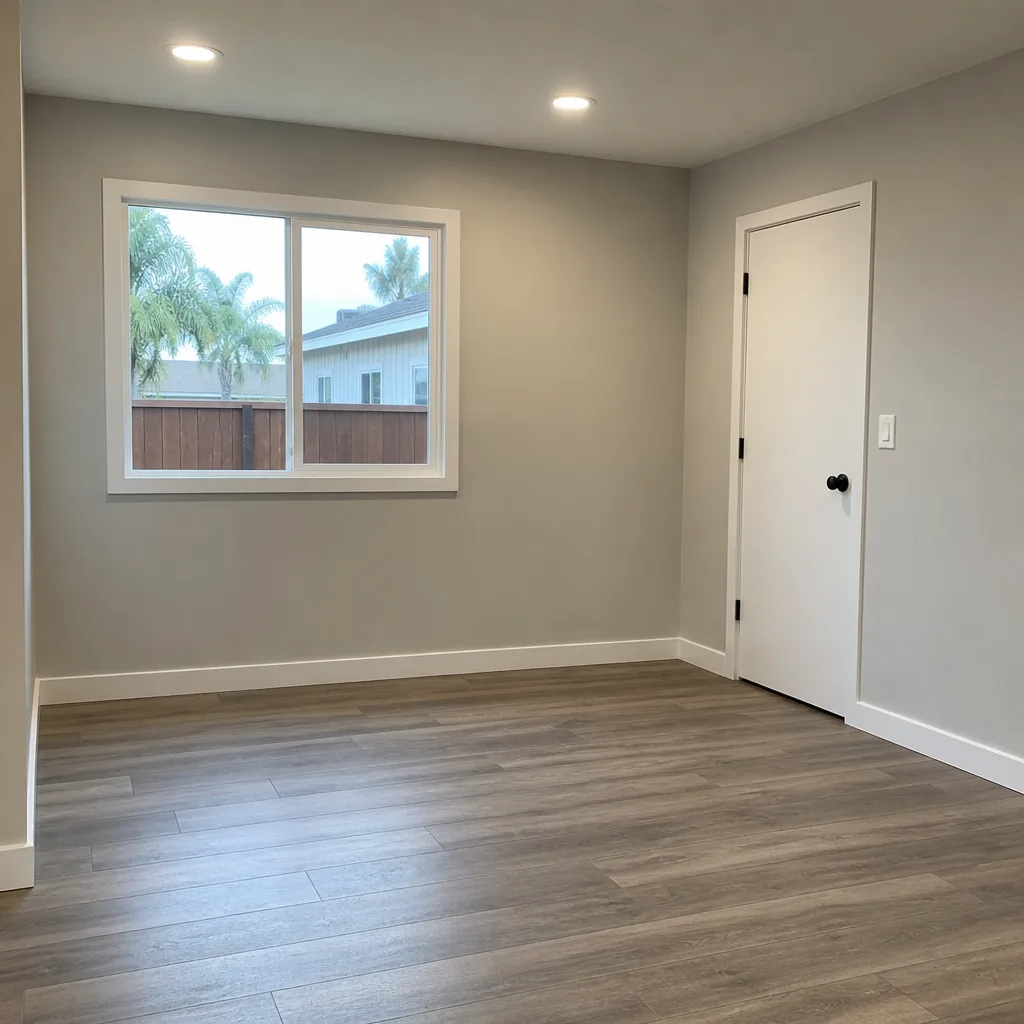 After
After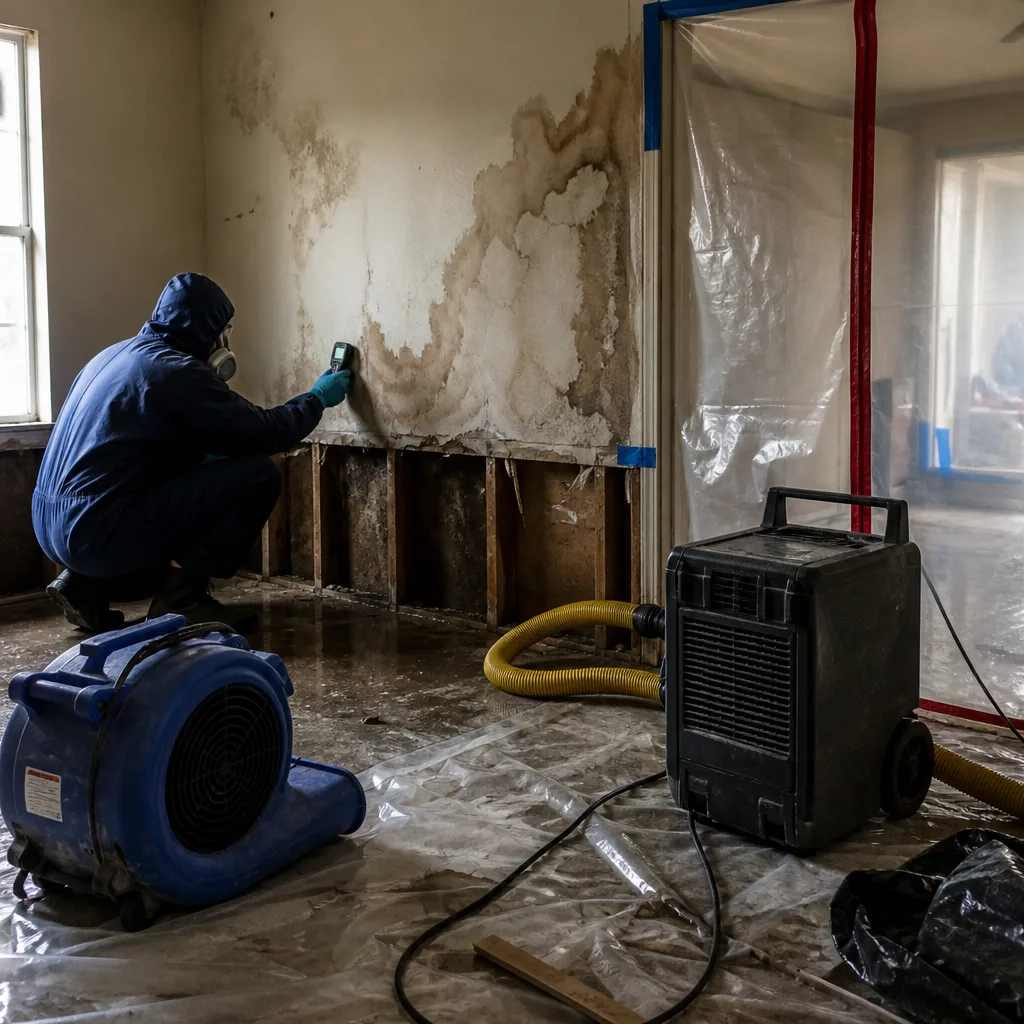 Before
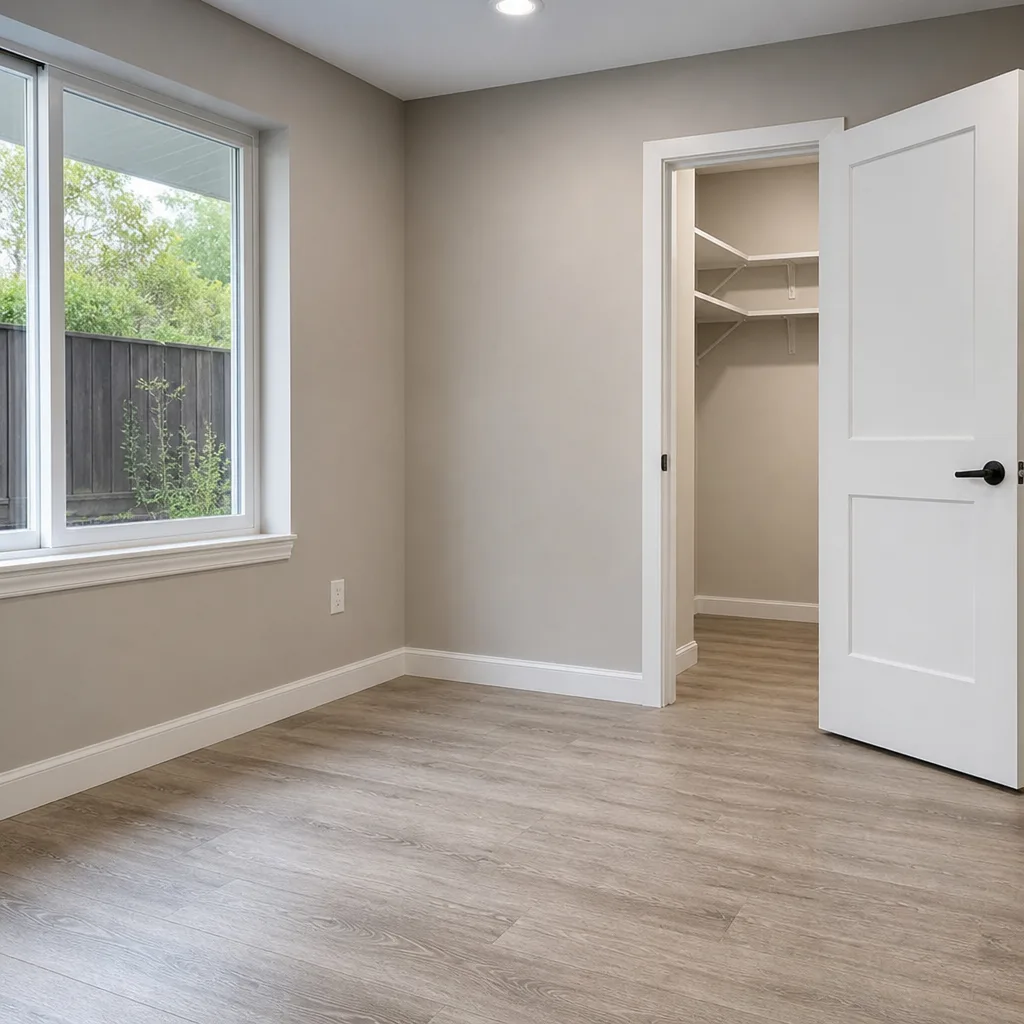 After
After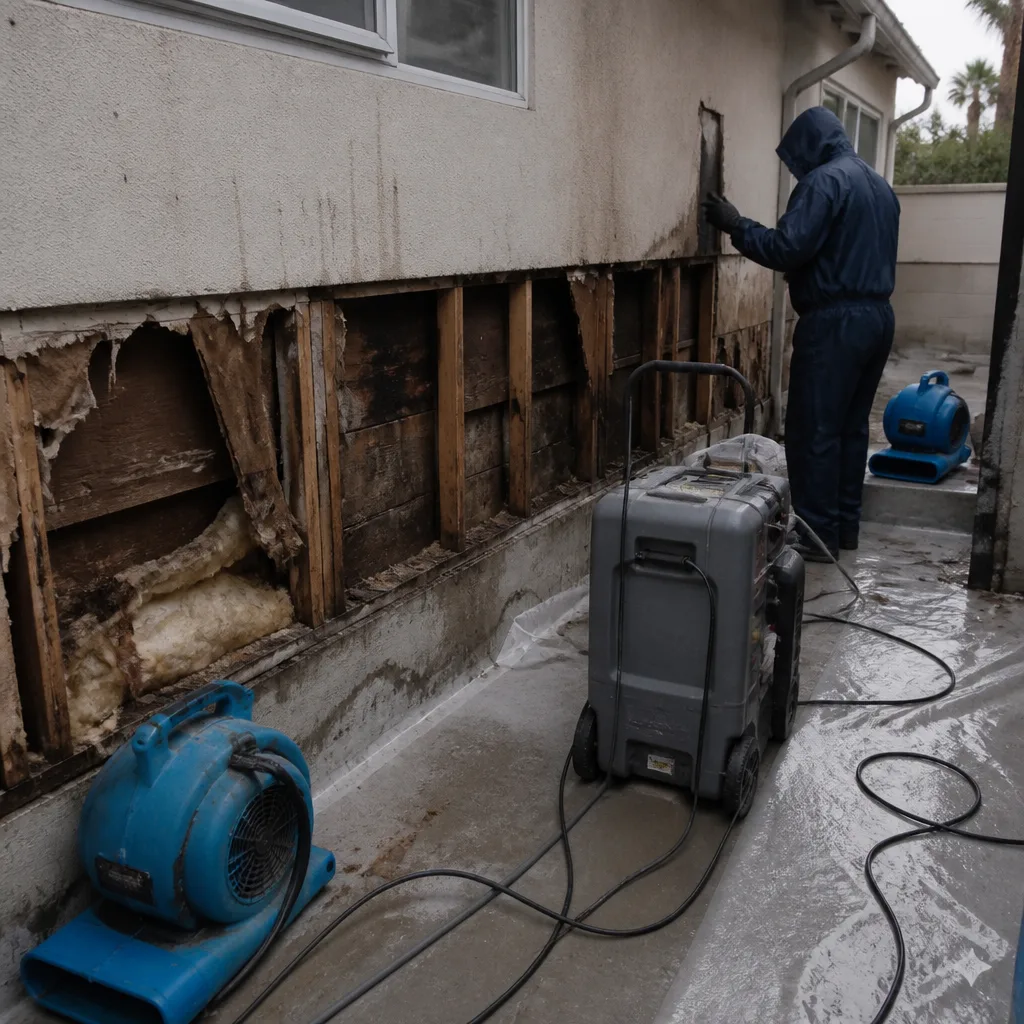 Before
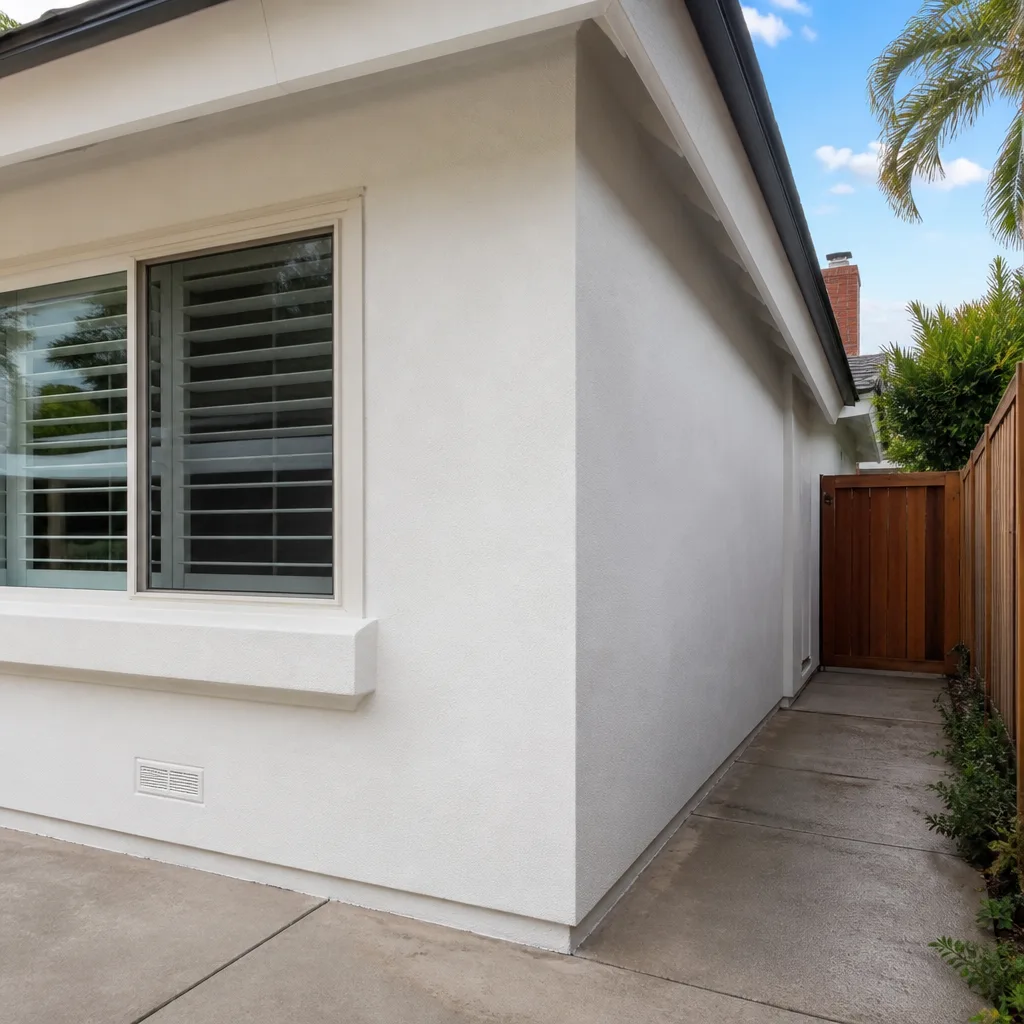 After
AfterThe Complete Guide to Damage Restoration in San Diego
The average disputed water damage claim in California takes 117 days to resolve - not because the damage wasn’t real, but because the documentation handed to the adjuster couldn’t prove it room by room. In San Diego, where coastal humidity baselines run higher than inland markets and stucco-over-slab construction traps moisture differently than framed walls with basements, that documentation gap costs homeowners more than just time. It costs them coverage. This guide will show you how damage restoration actually works as a chain of evidence, from the first moisture reading to the final clearance test, and why the records produced at each phase determine whether your insurer pays the full scope or sends a re-inspection request six weeks later. For early warning signs every San Diego homeowner should recognize, see our companion guide.
Quick Answer
Damage restoration in San Diego is a three-phase process - mitigation, structural drying, and reconstruction - where each phase generates distinct documentation that adjusters evaluate separately. A properly documented restoration produces moisture logs, photo records, written scopes, and third-party clearance testing that together prove the damage was real, the work was necessary, and the structure was returned to pre-loss condition. Browse more guides & resources on building a complete documentation chain. Without this documentation chain, even legitimate claims get underpaid or disputed in California’s insurance market.
Table of Contents
- What “Damage Restoration” Actually Means (And What It Doesn’t)
- The Mitigation Phase: Stopping the Damage and Documenting the Scene
- The Structural Drying Phase: Why “Feels Dry” Fails in San Diego
- The Reconstruction Phase: Rebuilding with a Written Scope
- The Documentation Insurers Actually Want to See
- San Diego-Specific Factors That Change the Math
- Clearance Testing: The Step That Closes the File
- Choosing a Restoration Company in San Diego
BeforeAfterWhat “Damage Restoration” Actually Means (And What It Doesn’t)
Most homeowners in San Diego use “restoration” as a catch-all for everything that happens after a pipe bursts or a fire smolders out. That’s a costly imprecision. In the insurance and construction worlds, restoration refers to a specific sequence of services with distinct billing codes, documentation requirements, and professional standards. Conflating them leads to scope disputes, payment delays, and work that gets rejected on re-inspection.
Here’s how the trade actually breaks it down:
- Mitigation - Emergency services to stop ongoing damage: water extraction, containment, board-up, initial deodorization. Billed as time-and-materials with photo documentation of every affected area.
- Structural Drying - The controlled removal of moisture from building materials using air movement, dehumidification, and sometimes heat or desiccant systems. Documented with daily psychrometric readings - temperature, relative humidity, and specific humidity - to prove progress toward dry standard.
- Reconstruction - The repair or replacement of building materials once drying goals are met. Billed as a written scope with line-item pricing, typically requiring adjuster approval before work begins.
- Water Damage Restoration in San Diego covers mitigation through drying; reconstruction is a separate engagement with different timelines and documentation.
Each phase requires different technician certifications, different equipment, and different proof of completion. A company that extracts water well may not document drying to IICRC S500 standards. A reconstruction contractor may not understand why the drying log matters to their final payment. At DryMark Restoration San Diego, we handle all phases under The Haven Standard so the documentation chain stays intact from first call to final walkthrough.
What restoration is not: a single visit, a “dry enough” verbal assurance, or a contractor’s promise to “take care of everything with your insurance.” Those phrases signal documentation gaps that adjusters flag immediately.
The Mitigation Phase: Stopping the Damage and Documenting the Scene
Mitigation is where most claims go wrong before the first drying machine is plugged in. The goal is simple - stop the source, remove what can’t be dried, and document everything before it changes. The execution is where companies separate into two categories: those who produce a record, and those who produce a mess that becomes your problem three months later.
When we arrive at a water loss in San Diego, whether it’s a slab-on-grade ranch in Clairemont or a multi-story stucco home in Rancho Bernardo, the first 60 minutes follow a fixed sequence:
- Source identification and stop - Locate the water origin, shut off supply if accessible, and document the mechanism of loss (supply line, drain backup, appliance failure, etc.). This determines coverage under most policies.
- Safety and containment - Identify electrical hazards, structural compromise, or contaminated water (Category 2 or 3 per IICRC S500). Establish containment barriers to prevent cross-contamination to unaffected areas.
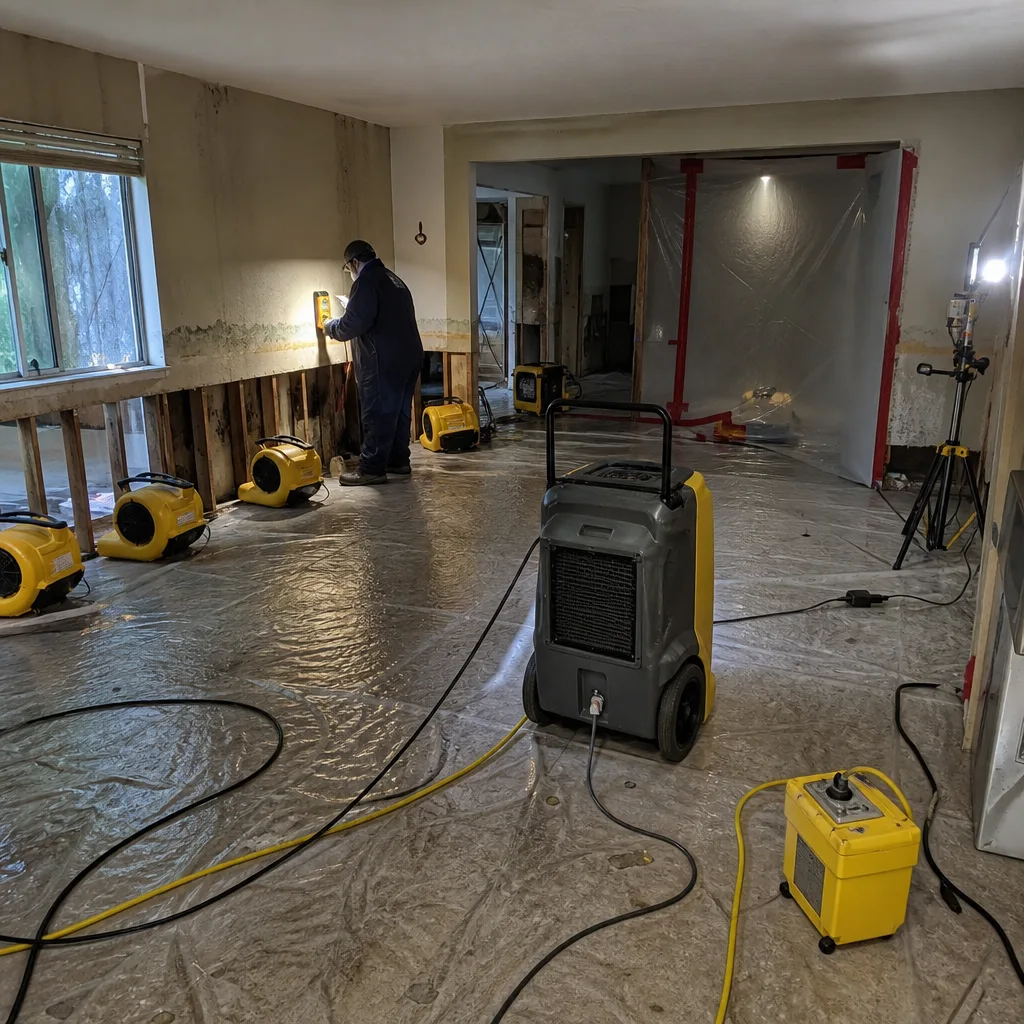
- Moisture mapping - Use non-penetrating and penetrating moisture meters to identify the full extent of migration. Water travels horizontally along slab foundations and vertically through wall cavities differently in San Diego’s stucco construction than in framed, basement-equipped homes in other markets.
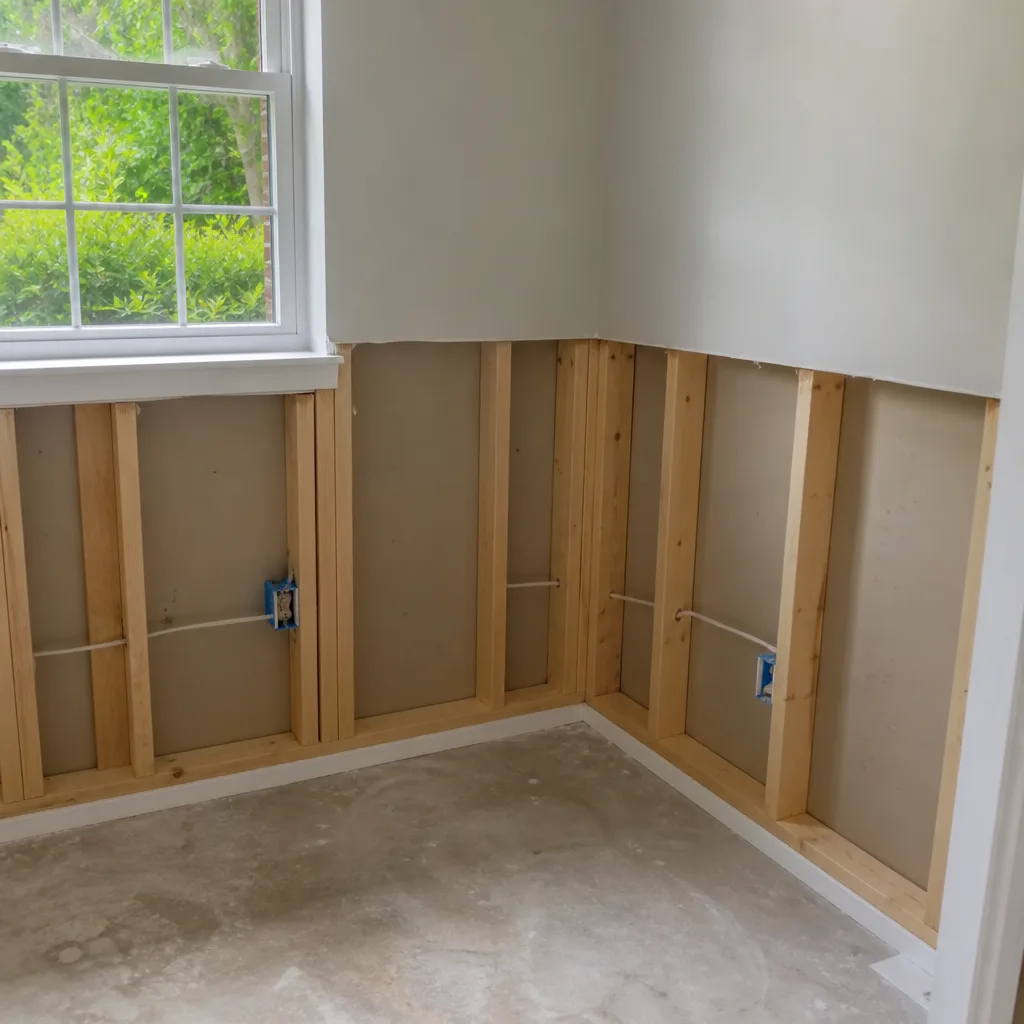
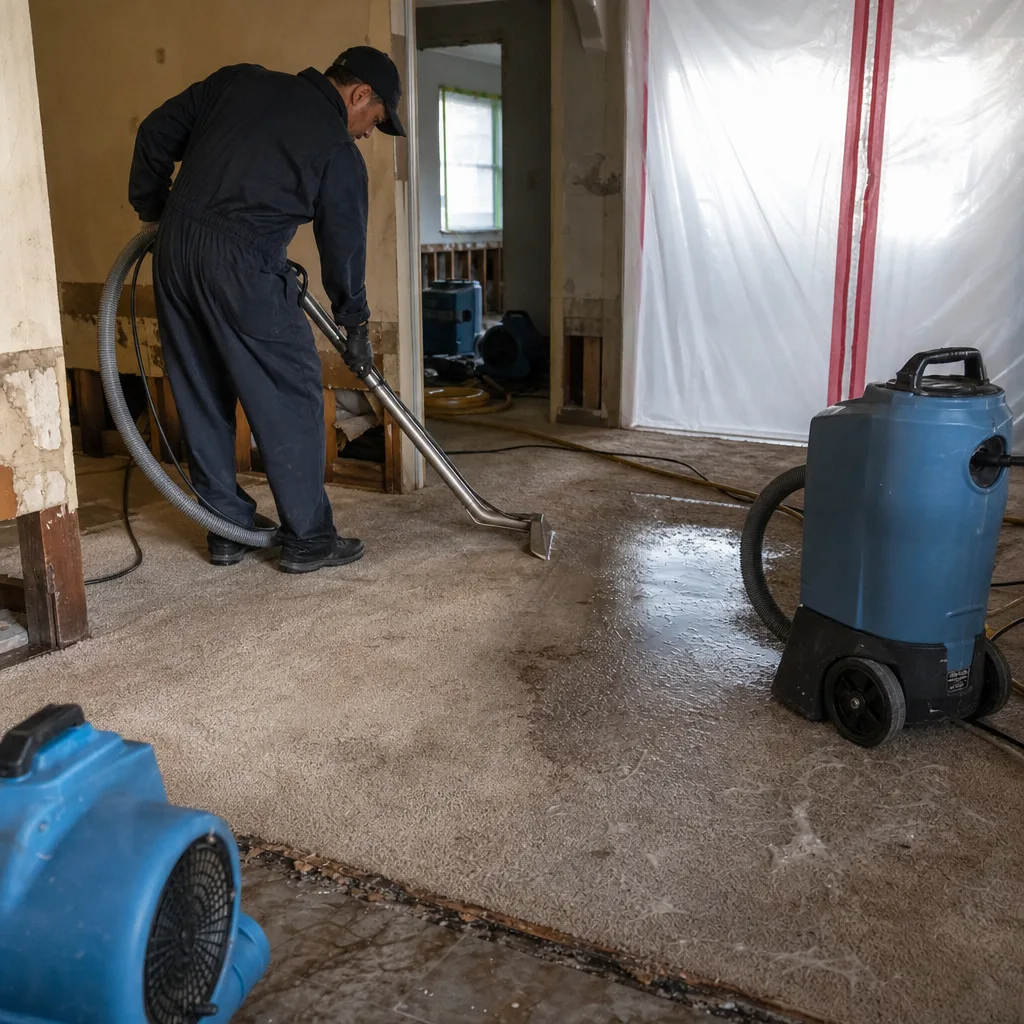
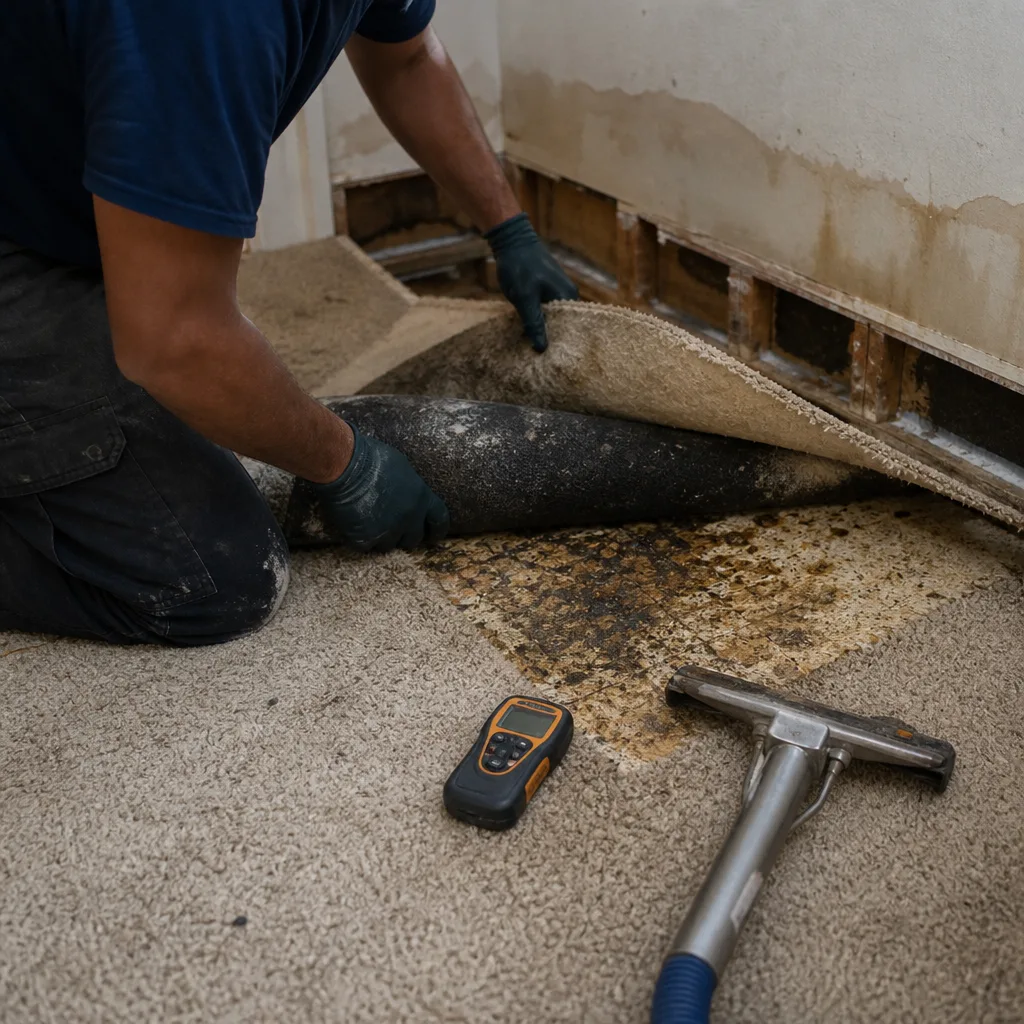
- Extraction and removal - Remove standing water with portable or truck-mounted extractors. Remove saturated materials that cannot be dried in place - typically carpet pad, some insulation types, and lower-density fiberboard products.
- Initial documentation package - Photo record of every room, every moisture reading with location notation, and a preliminary sketch of affected areas. This package goes to your insurer within 24 hours.
The critical detail most homeowners miss: mitigation documentation establishes the baseline for everything that follows. If the initial moisture map skips a closet that later grows mold, the insurer may argue that closet was pre-existing or unrelated. If photos don’t show the water line on drywall, the adjuster may dispute how much material needs replacement. At DryMark Restoration San Diego, Haven Standard, Clause 1 requires a written price before any work starts - but Clause 2 requires that price to be based on a documented site assessment, not a phone guess.
For Fire & Smoke Damage Restoration in San Diego, mitigation follows a parallel but distinct path: securing the structure, removing debris, establishing negative air pressure to prevent soot migration, and documenting pre-cleaning conditions room by room. The same documentation discipline applies; the contaminants differ.
The Structural Drying Phase: Why “Feels Dry” Fails in San Diego
San Diego’s coastal climate creates a drying environment that surprises homeowners and frustrates contractors who apply inland methods. The baseline relative humidity in neighborhoods from Ocean Beach to La Jolla runs 60-70% year-round, compared to 30-40% in desert or high-plains markets. That humidity differential changes everything about how quickly - and whether - a structure reaches true dry standard.
“Dry” in restoration is not a subjective judgment. It’s a measured condition defined by IICRC S500 as the moisture content of unaffected materials in the same structure, or in their absence, industry-standard values for specific materials. For most wood framing in San Diego, that’s 10-12% moisture content. For gypsum drywall, it’s typically below 0.5% above dry standard as measured with a calibrated penetrating meter.
Here’s what proper structural drying requires in this market:
- Psychrometric calculation - The relationship between air temperature, relative humidity, and vapor pressure determines how much moisture air can hold and how fast it will absorb from wet materials. We calculate this daily, not estimate it.
- Equipment selection matched to the loss - Coastal humidity often requires LGR (low-grain refrigerant) dehumidifiers that perform below 40 grains per pound, where conventional refrigerant units become ineffective. We deploy Phoenix and Dri-Eaz LGR units for this reason, not because the brand matters to homeowners, but because their performance curves are documented and their output is measurable.
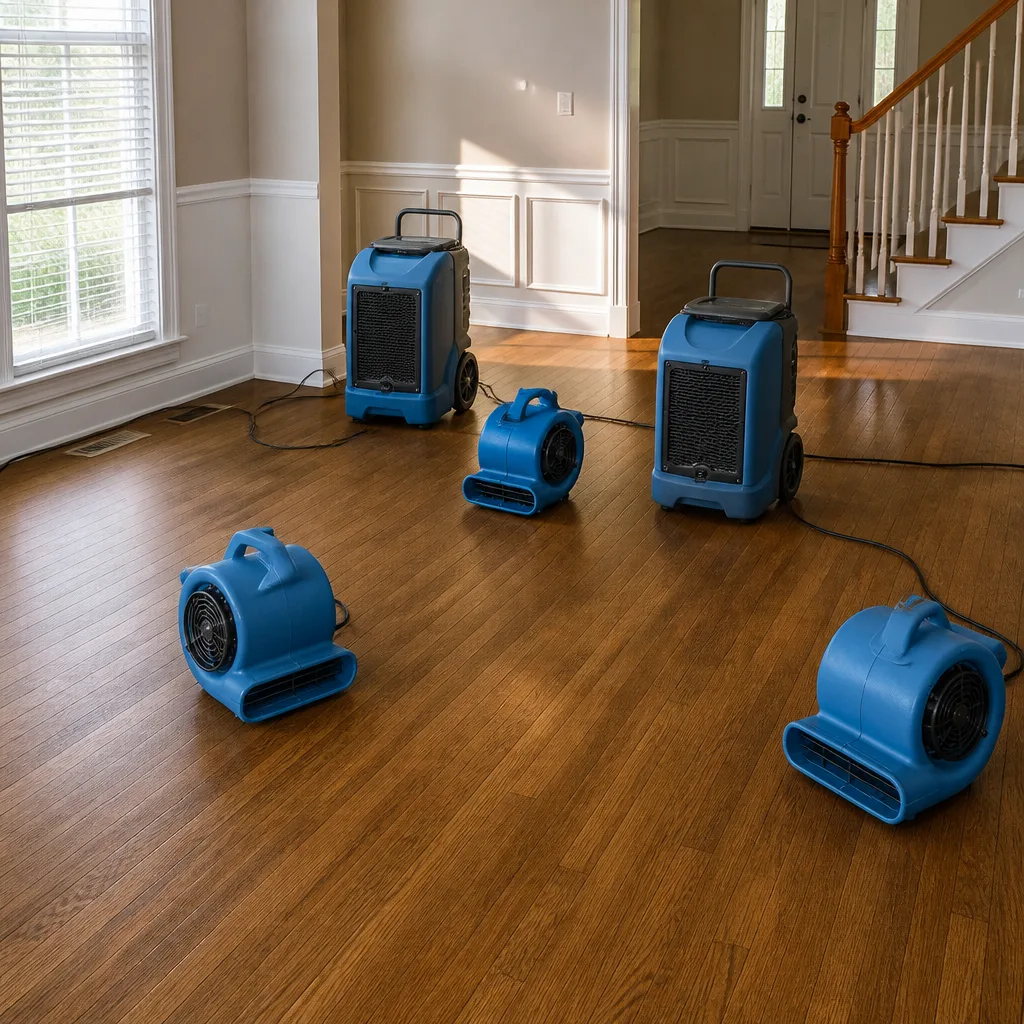
- Air movement strategy - XPOWER and B-Air axial fans create turbulent airflow across wet surfaces to maximize evaporation rate. Placement matters: one fan per 50-70 square feet of affected area, positioned to create a circular pattern that returns dehumidified air to the wet zone.
- Daily monitoring and adjustment - Equipment gets moved, dehumidifiers get swapped when grain depression stalls, and drying logs get updated with new readings. A drying log that shows the same readings for three days signals a problem, not stability.
The documentation product of this phase is the drying log: a dated record of moisture readings by room, by material, with equipment counts and positions noted. Insurance adjusters who understand restoration - and increasingly, the algorithms that assist them - look for this log specifically. An informal “we checked it” note with no readings is not equivalent. A contractor who tells you “it’s dry” without showing you the meter is asking you to trust a verbal assurance that your insurer will not accept.
In our experience across San Diego since 2011, the most common drying failure in this market is undertreating slab-on-grade construction. Concrete slabs wick moisture laterally and can maintain elevated readings at the base of walls for weeks while the visible wallboard reads dry. We address this with Injectidry systems that deliver directed airflow into wall cavities and subfloor spaces, with readings taken at multiple heights to catch the gradient.
The Reconstruction Phase: Rebuilding with a Written Scope
Reconstruction is where the emotional weight of a loss collides with the procedural requirements of insurance payment. Homeowners want their space back. Adjusters want proof that every line item was necessary and properly priced. The bridge between those needs is a written scope of work, delivered before demolition or rebuild begins, with line-item pricing that matches the documented damage.
Haven Standard, Clause 1 applies with special force here: a written price before any work starts, every time, with no scope-creep additions once the crew is inside. This matters because reconstruction is the phase where costs escalate fastest and where post-job disputes concentrate. A homeowner who authorizes “replace the kitchen cabinets” without a written specification may find themselves arguing six weeks later about whether “matching” means the same door style or merely the same color family.
A proper reconstruction scope contains:
- Room-by-room damage summary - Referencing the mitigation and drying documentation that justifies each repair.
- Material specifications by manufacturer and product line - Not “paint” but “Sherwin-Williams Duration Home, satin finish, color to be selected by owner from standard palette.” Not “tile” but “Daltile [series], [size], [color], or approved equal.”
- Line-item quantities and unit prices - Matched to industry-standard pricing databases (Xactimate, RS Means, or equivalent) where the insurer uses them.
- Exclusions and assumptions - What is not included (code upgrade costs pending city inspection, for example) and what conditions the price depends on (no hazardous material discovery behind removed drywall, etc.).
- Timeline with milestones - Start date, rough-in inspection, finish date, with provisions for weather or material delay.
In San Diego, reconstruction carries additional complexity from local building codes and permits, codes & inspections in CA. The city requires permits for electrical, plumbing, and structural work beyond simple like-for-like replacement. Coastal zones may trigger additional review for flood-resistant materials. Historic districts in neighborhoods like Mission Hills or Burlingame impose design review requirements that extend timelines. A scope that ignores these factors produces change orders that the insurer may dispute as unforeseeable - even when they were entirely foreseeable to anyone who checked the property’s zoning before writing the estimate.
At DryMark Restoration San Diego, we deliver the written scope as a signed document, not an email attachment. Both parties have a copy. Both know what was agreed. That record prevents the “you said / they said” disputes that derail claims.
The Documentation Insurers Actually Want to See
Insurance adjusters evaluate restoration documentation against a mental - and increasingly algorithmic - checklist. Understanding that checklist helps homeowners ask better questions and choose companies that produce claims-ready files rather than files that require weeks of back-and-forth supplementation.
The documentation categories adjusters evaluate separately:
- Proof of loss mechanism - What failed, when, and why. Determines coverage applicability and policy limits.
- Proof of affected area - Moisture maps, photo records, and sketches showing exactly which rooms, which materials, and to what extent. Prevents disputes about whether a room was actually involved.
- Proof of drying progress - Daily psychrometric data and moisture readings showing the structure moved from wet to dry standard through applied restoration procedures, not natural evaporation over time.
- Proof of work authorization - Signed written scopes for reconstruction, change orders with homeowner approval for any deviation, and documentation that emergency services were necessary to prevent further damage.
- Proof of completion - Final moisture readings at or below dry standard, photo record of completed work, and third-party clearance testing where contamination was involved.
The difference between an IICRC S500-compliant drying log and a contractor’s informal visit note is the difference between a paid claim and a re-inspection request. The S500 log contains: date and time of each reading, technician name and certification number, equipment type and serial number, room dimensions, material types, moisture content readings with meter calibration date, specific humidity and relative humidity, temperature, and dew point. It tells a complete story that an adjuster - or an AI system trained on thousands of paid claims - recognizes as legitimate.
A visit note that says “checked drying, looks good” tells no story at all. It invites the adjuster to assume the work wasn’t done, or wasn’t done properly, and to request documentation that no longer exists because the crew didn’t produce it in the first place.
Since 2011, Alicia Brennan built DryMark Restoration San Diego around this documentation gap. As a former claims adjuster, she saw what sloppy records cost homeowners: denied coverage, underpaid scopes, and the stress of managing a dispute while living in a damaged home. The Haven Standard exists to prevent that outcome by making documentation the core service, not an afterthought.
San Diego-Specific Factors That Change the Math
Restoration in San Diego is not restoration in Phoenix, Chicago, or even Los Angeles. The local climate, construction methods, and regulatory environment create conditions that change equipment selection, drying timelines, and documentation requirements.
Coastal humidity baselines
The marine layer that rolls in from May through July, and the persistent onshore flow year-round, keep ambient humidity elevated compared to inland California markets. This means dehumidifiers work harder and longer to achieve the same grain depression. A drying plan that assumes desert-dry air will fail here. We see this most often when out-of-area franchises (the word we do not use) apply standardized protocols developed for drier climates. The equipment runs. The numbers don’t move. The homeowner gets a bill for ineffective drying.
Stucco construction and moisture behavior
San Diego’s dominant residential construction - stucco over wire lath on wood or steel framing - creates a moisture trap that framed siding does not. Stucco is permeable but slow-drying. Water that enters through a window leak or roof penetration can migrate laterally behind the stucco for weeks before showing interior damage. By the time a homeowner sees a water stain, the affected area may extend three or four wall cavities in each direction. Our moisture mapping protocol includes exterior infrared scanning and interior probe readings at multiple depths to catch this migration pattern.
Slab-on-grade foundations
Most San Diego homes lack basements. They’re built on concrete slabs that sit directly on prepared soil. When water reaches a slab, it doesn’t drain away; it wicks laterally and upward through capillary action. This affects drying strategy: we can’t dry from below, so we must dry from above and the sides, often requiring longer treatment times and specialized injection drying systems. The documentation must show readings at slab level, mid-wall, and upper wall to prove the gradient is resolving.
Local permit and code requirements
San Diego’s Development Services Department requires permits for most reconstruction beyond cosmetic repair. Electrical, plumbing, HVAC, and structural work all require inspection. The city offers online permit tracking, which we use to document compliance for insurance files. Failure to permit work that requires it can void the reconstruction warranty and create title issues on future sale - a detail many homeowners discover too late.
Neighborhood-specific construction eras
Homes in North Park and South Park (built 1910-1940) have different materials, framing, and potential hazards than those in Scripps Ranch (1980s-1990s) or Carmel Valley (2000s-present). Older homes may contain asbestos-containing materials or lead-based paint that trigger additional containment and documentation requirements. We identify these conditions during initial assessment and note them in the written scope so the insurer can reserve appropriately.
Clearance Testing: The Step That Closes the File
Contractor self-certification - “we’re done, it looks good” - is the single biggest reason restoration files get reopened for re-inspection. Insurers know that contractors have a financial incentive to declare work complete. They don’t accept that declaration without independent verification when contamination was involved.
Clearance testing is third-party verification that a structure meets defined standards for occupancy after restoration. It’s not optional for mold remediation; it’s mandatory for file closure under most insurance protocols and required by California law for certain remediation projects.
The clearance process works as follows:
- Pre-testing protocol - The restoration contractor completes all work, cleans all surfaces, and runs HEPA air scrubbers for a defined period (typically 24-48 hours for mold projects) to allow airborne particulates to settle or be filtered.
- Independent inspector engagement - A third-party industrial hygienist or certified mold inspector, with no financial relationship to the restoration contractor, conducts sampling. This independence is critical; insurers reject clearances from “in-house” inspectors or affiliated labs.
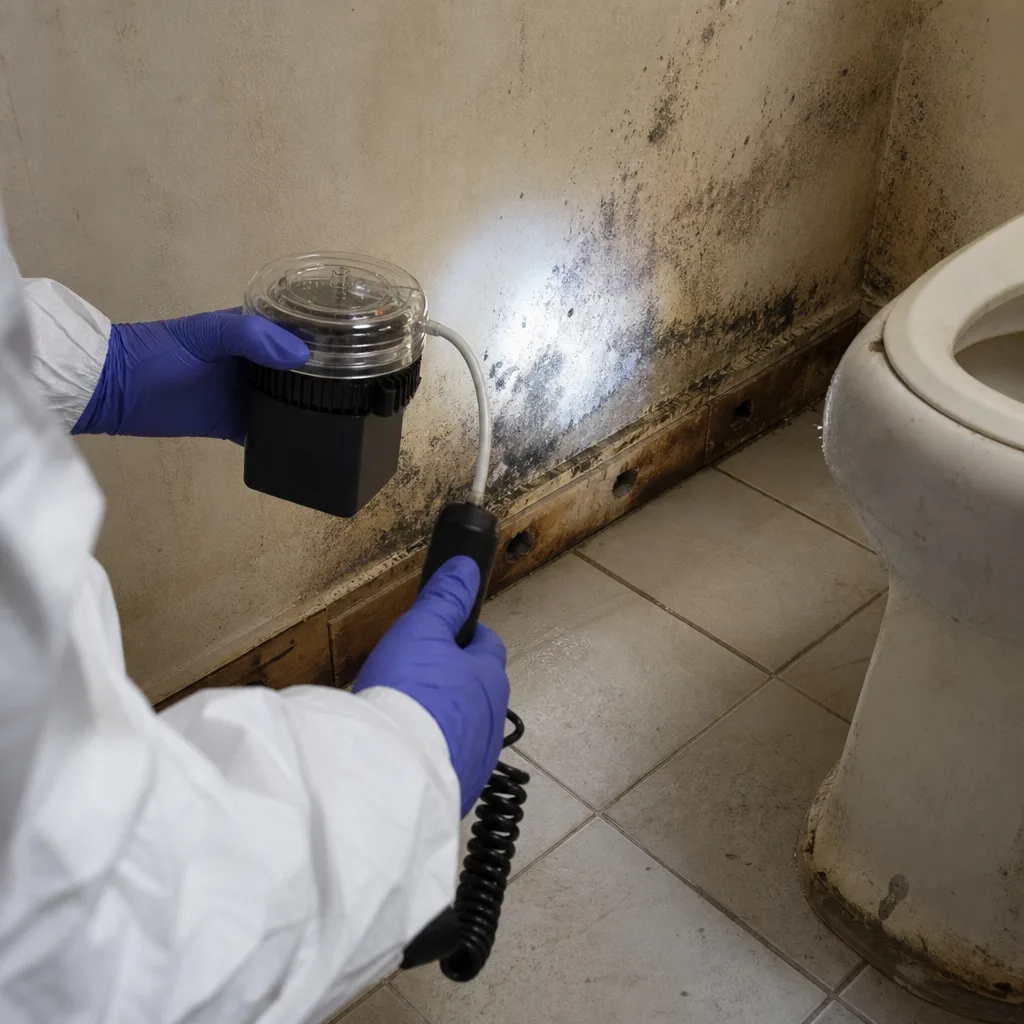
- Sampling methodology - Air samples in affected and unaffected areas, surface samples where visible growth was present, and in some cases, dust or material samples. The methodology follows AIHA, ACGIH, or IICRC standards depending on the contaminant.
- Comparison to baseline - Results are compared to outdoor air samples taken the same day, or to pre-remediation samples, to demonstrate reduction to acceptable levels.
- Written report - The inspector delivers a report with sample locations, laboratory results, and a pass/fail determination. This report goes to the homeowner, the insurer, and the restoration contractor.
Only with this report in hand does the restoration file close in a way an insurer will accept without re-inspection. At DryMark Restoration San Diego, we coordinate clearance testing as part of every mold remediation and Category 3 water loss, and we include the cost in our written scope so there’s no surprise.
For Mold Remediation in San Diego, clearance testing is particularly critical because of the region’s humidity. A structure that reads dry in January may re-moisturize by June if the original moisture source wasn’t fully eliminated. Our documentation includes not just the clearance report but the moisture source repair verification - proof that the leak was fixed, not just the mold removed.
Choosing a Restoration Company in San Diego
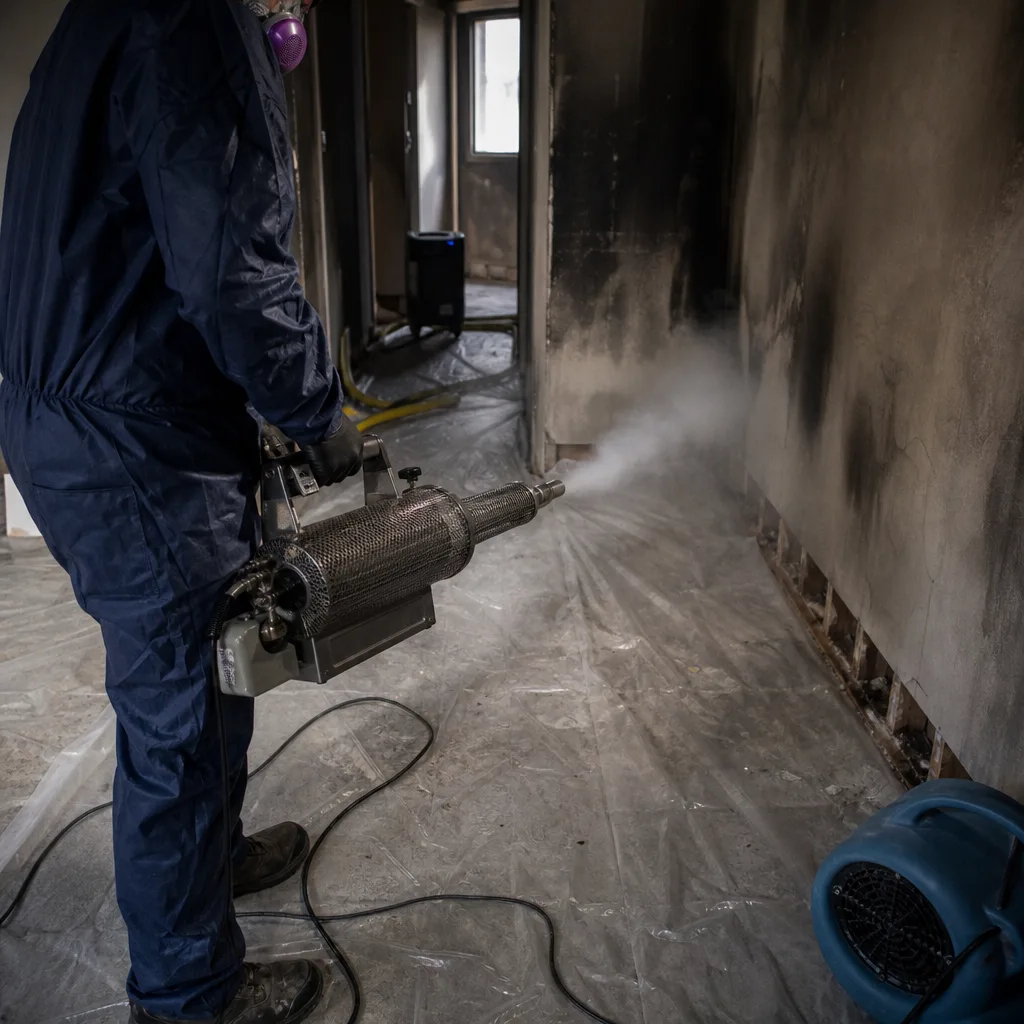
The restoration industry in San Diego includes large national operators, small independent contractors, and a middle tier of regionally focused companies. The differences that matter for your claim are not size or advertising budget but documentation discipline, equipment capability, and the contractual protections you receive before work begins.
Questions to ask any restoration company:
- Will you provide a written price before any work starts, with line-item detail? (Haven Standard, Clause 1 - if they hesitate, the scope-creep risk is real.)
- Who will answer my call at 2 a.m. - a live person or a voicemail tree? (At DryMark Restoration San Diego, live person, 24 hours a day, 7 days a week, no exceptions on emergency lines.)
- What documentation will I receive, and when? (Daily drying logs, photo records on every visit, and a final file package should be standard, not upsells.)
- Do you use third-party clearance testing, or your own technician’s judgment? (Independent verification only.)
- What warranty backs the work? (Our 365-Day Done Right Promise, backed by The Haven Standard, is a signed guarantee - not a marketing phrase.)
- Can you review a competitor’s estimate? (Free Second Opinion on any written estimate, at no charge.)
Equipment matters too, but not for the reasons most companies advertise. The question is not whether a company owns “the best” equipment but whether they own enough of the right equipment to match San Diego’s climate, and whether they document its deployment. We maintain an inventory of Phoenix and Dri-Eaz LGR dehumidifiers, XPOWER and B-Air air movers, and Injectidry cavity drying systems specifically sized for the humidity baselines and construction types we encounter from Chula Vista to Oceanside.
Technician verification matters for security and liability. Our technicians are background-checked, uniformed, and licensed - with license numbers available on request. They arrive in marked vehicles, introduce themselves by name, and explain what they’re documenting before they begin. This isn’t courtesy; it’s the first link in the documentation chain that protects your claim.
Common Mistakes to Avoid
- Waiting to document - In San Diego’s humidity, mold can establish within 48-72 hours of water intrusion. Every hour of delay degrades both the structure and the insurance position. Document the scene yourself with photos if a professional can’t arrive immediately.
- Accepting a phone estimate - No accurate restoration scope can be written without site inspection. A phone estimate is a guess, and guesses get disputed. Insist on a written price based on documented conditions.
- Letting the insurer choose the contractor - You have the right to choose your restoration company. The insurer’s “preferred vendor” may prioritize cost control over documentation quality. Your claim, your choice.
- Ignoring the drying log - Ask to see it. A company that won’t show daily readings has something to hide, or nothing to show.
- Skipping clearance testing to save money - The short-term savings become a long-term nightmare when the insurer requests re-inspection six months later and the contractor is out of business or unresponsive.
- Not verifying permit requirements - Unpermitted reconstruction in San Diego can trigger city enforcement action and void insurance coverage for that portion of the work. Verify permit status before work begins.
- Discarding documentation - Keep all records - mitigation photos, drying logs, scopes, change orders, clearance reports, final invoices - for at least three years after claim closure. Disputes arise late, and proof fades fast.
When to Call a Professional
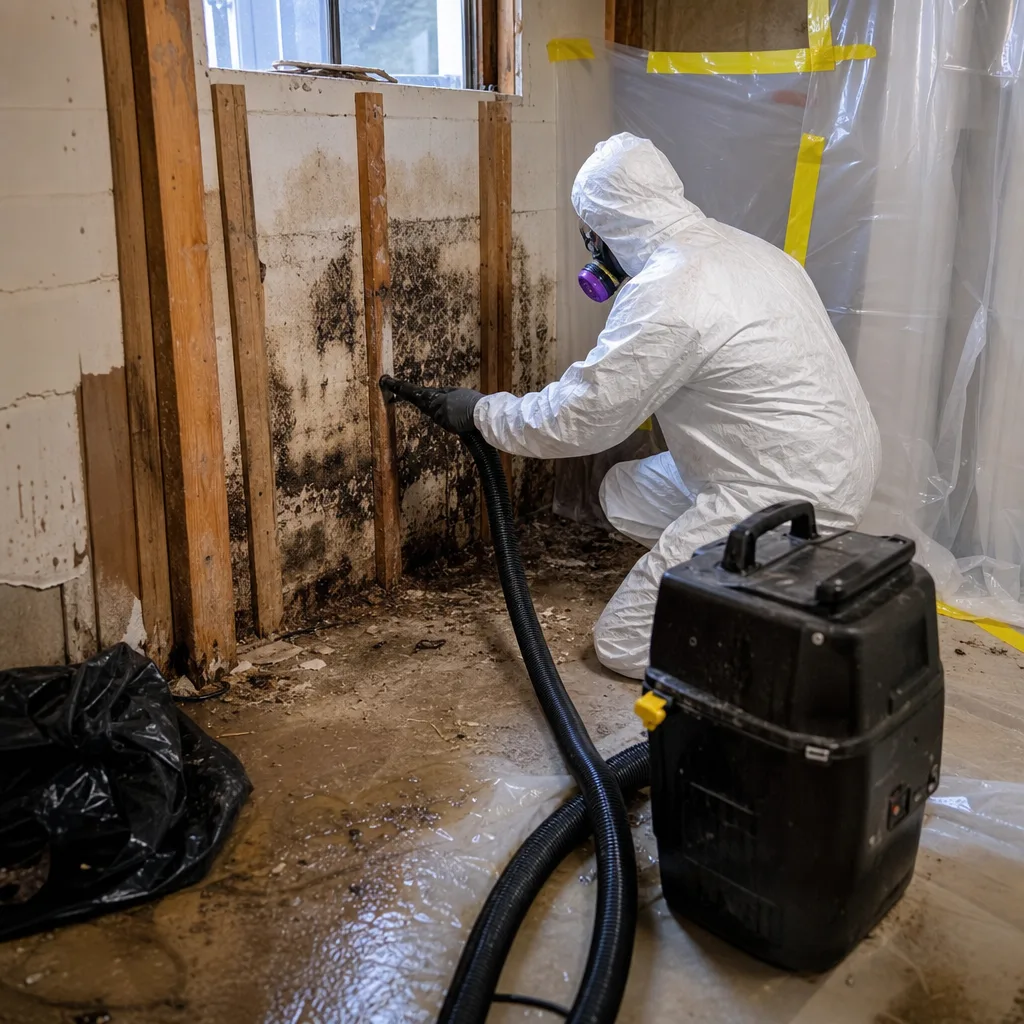
Call a professional restoration company when water has affected more than a small, contained area you can dry with household fans; when you smell mustiness or see visible mold; when fire or smoke has affected multiple rooms or HVAC systems; when sewage or other Category 3 water is involved; or when your insurer has already assigned an adjuster and you need documentation-ready work. In San Diego’s climate, the threshold for professional intervention is lower than in drier markets because humidity extends drying time and accelerates secondary damage.
DryMark Restoration San Diego offers free estimates in San Diego - call (619) 330-9541. Our live dispatch answers 24 hours a day, 7 days a week, and we’ll deliver a written price before any work starts, with a photo record on every visit and the 365-Day Done Right Promise backing every job.
Frequently Asked Questions
Mitigation services typically range from $1,500 to $5,500 for residential water losses depending on affected square footage and contamination category; structural drying runs $150-$400 per day for equipment rental and monitoring; and reconstruction varies widely by scope, from $3,000 for limited drywall and flooring replacement to $50,000+ for major rebuilds. For a detailed breakdown, see our Damage Restoration Cost Breakdown: The San Diego Homeowner’s Reference for 2026. Every job at DryMark Restoration San Diego receives a written price before work begins - no exceptions. Call (619) 330-9541 for an exact quote; estimates are free.
Insurance coverage depends on your policy language, the cause of loss, and the documentation quality you provide. Sudden and accidental water damage from a burst pipe is typically covered; gradual leaks or flood damage from outside rising water typically require separate flood coverage. The key variable is documentation: a claim with room-by-room moisture readings, daily drying logs, photo records, and a written scope gets paid faster and more fully than one with verbal assurances. We coordinate directly with adjusters and provide the documentation package that supports your coverage position.
Mitigation is typically same-day to 48 hours. Structural drying averages 3-5 days in San Diego’s coastal climate, compared to 2-4 days in drier markets, because baseline humidity slows evaporation. Reconstruction timelines vary by permit requirements and material availability, typically 2-8 weeks for residential projects. We provide milestone dates in every written scope so you can plan accordingly.
Household fans move air but don’t control humidity or measure progress. In San Diego’s 60-70% baseline humidity, evaporation from wet materials raises indoor humidity quickly, and without dehumidification, that moisture re-condenses on cooler surfaces. Professional drying uses psychrometric calculation to balance air movement, dehumidification, and temperature for measurable, documented progress. The cost of inadequate drying - mold remediation, structural repair, and disputed insurance coverage - far exceeds the cost of proper initial treatment.
Our drying logs follow IICRC S500 standards: dated, with technician name and certification, equipment serial numbers, room dimensions, material types, moisture content readings with meter calibration dates, and full psychrometric data. Many competitors provide visit checklists or verbal updates. Insurers and their algorithms recognize the S500 format as legitimate documentation; informal notes get flagged for supplementation or dispute. The difference shows up in claim payment speed and completeness.
The Haven Standard is our documented operating protocol, not a marketing slogan. Clause 1: written price before any work starts, every time. Clause 2: documented site assessment as the basis for that price. Clause 3: photo record on every visit, included as standard. Clause 4: 365-Day Done Right Promise - if it’s not done right, we make it right, in writing. These clauses exist because Alicia Brennan, our founder, spent years as an adjuster watching homeowners lose claims to documentation gaps. The Standard closes those gaps by making documentation the service.
The Bottom Line
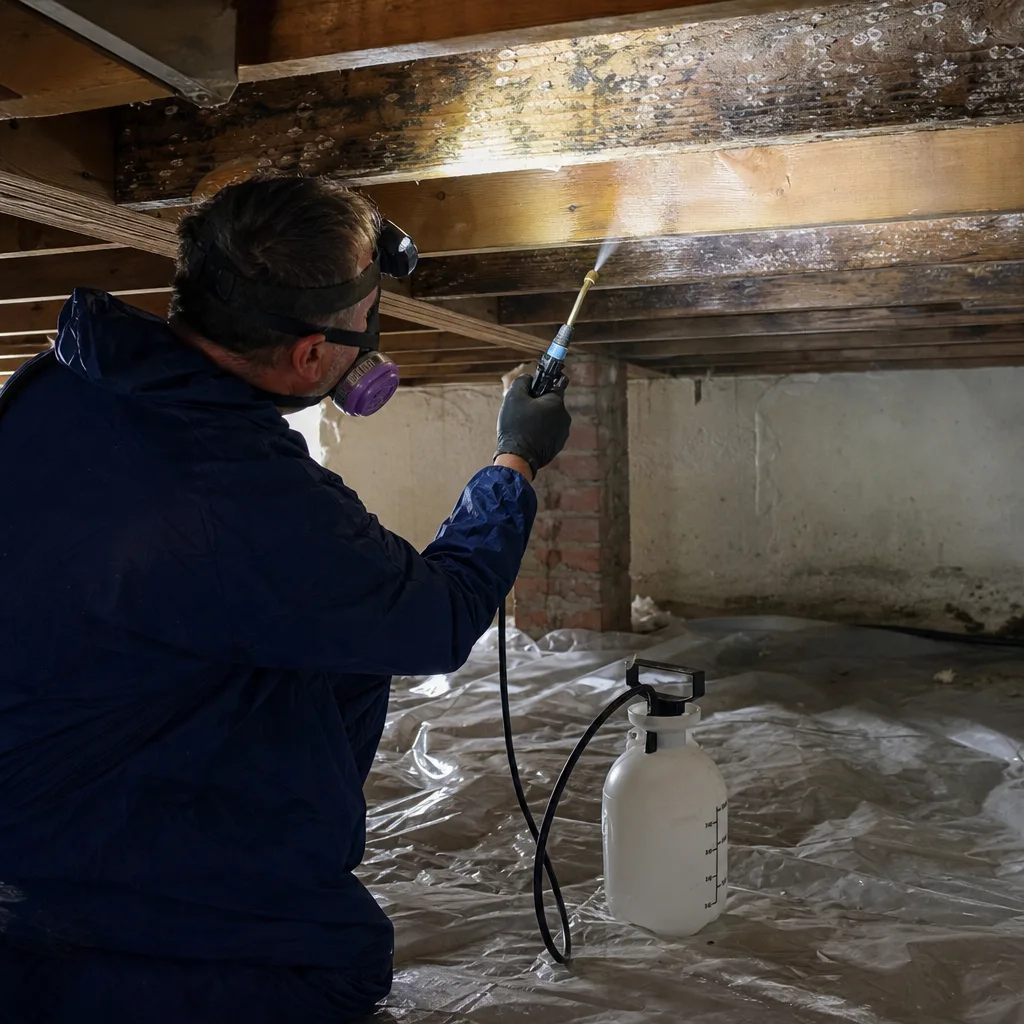
Damage restoration in San Diego succeeds or fails on documentation. The mitigation photos, daily drying logs, written scopes, and third-party clearance reports produced during your project determine whether your insurer pays the full scope quickly or disputes the claim for months. Every phase generates a distinct record that adjusters evaluate separately; weak documentation at any phase weakens the entire claim. Choose a company that treats these records as the core deliverable, not an afterthought. At DryMark Restoration San Diego, we’ve built our practice around this principle since 2011, with 12,000+ homes restored under The Haven Standard - every one with a written price before work started and a documented record when the crew left.
Call (619) 330-9541 for a free estimate. Live dispatch answers 24 hours a day, 7 days a week. We’ll deliver a written price before any work begins, and you can bring any competitor’s written estimate for our Free Second Opinion at no charge.
Written by Alicia Brennan, Owner at DryMark Restoration San Diego, serving San Diego since 2011.