
Last updated September 23, 2026
Free visual inspection and a written scope of work before any mitigation begins - photos, moisture readings, and drying logs go in your claim file
The scope we write is the scope we bill. Anything new gets shown to you, in writing, before we touch it.



 Before
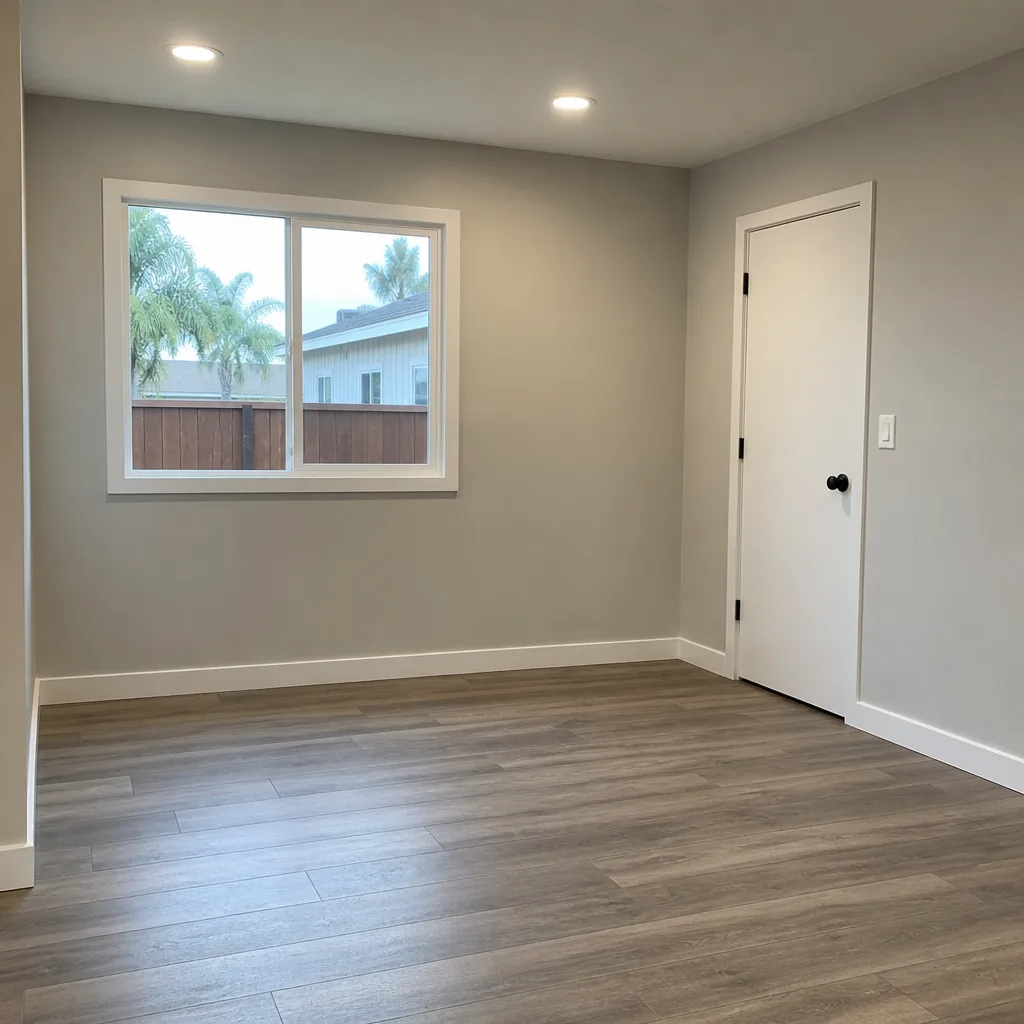 After
After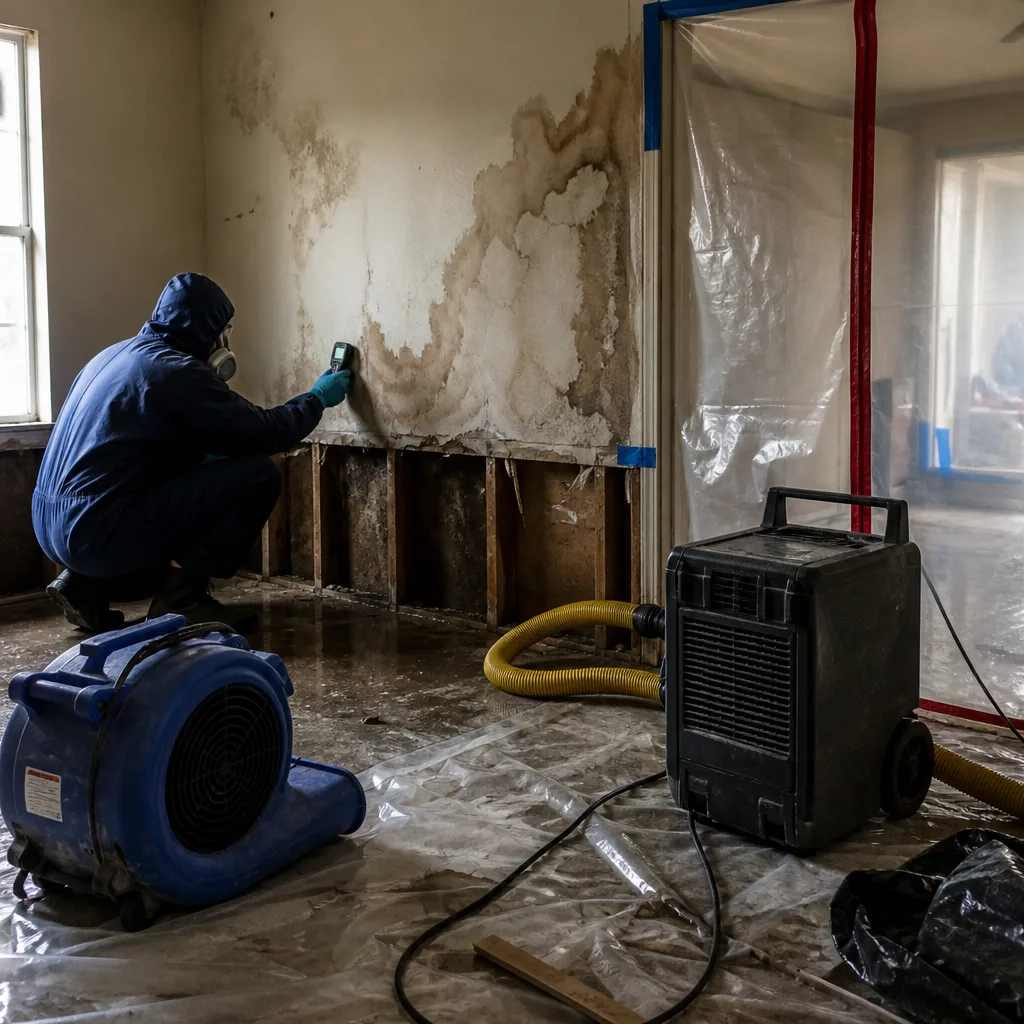 Before
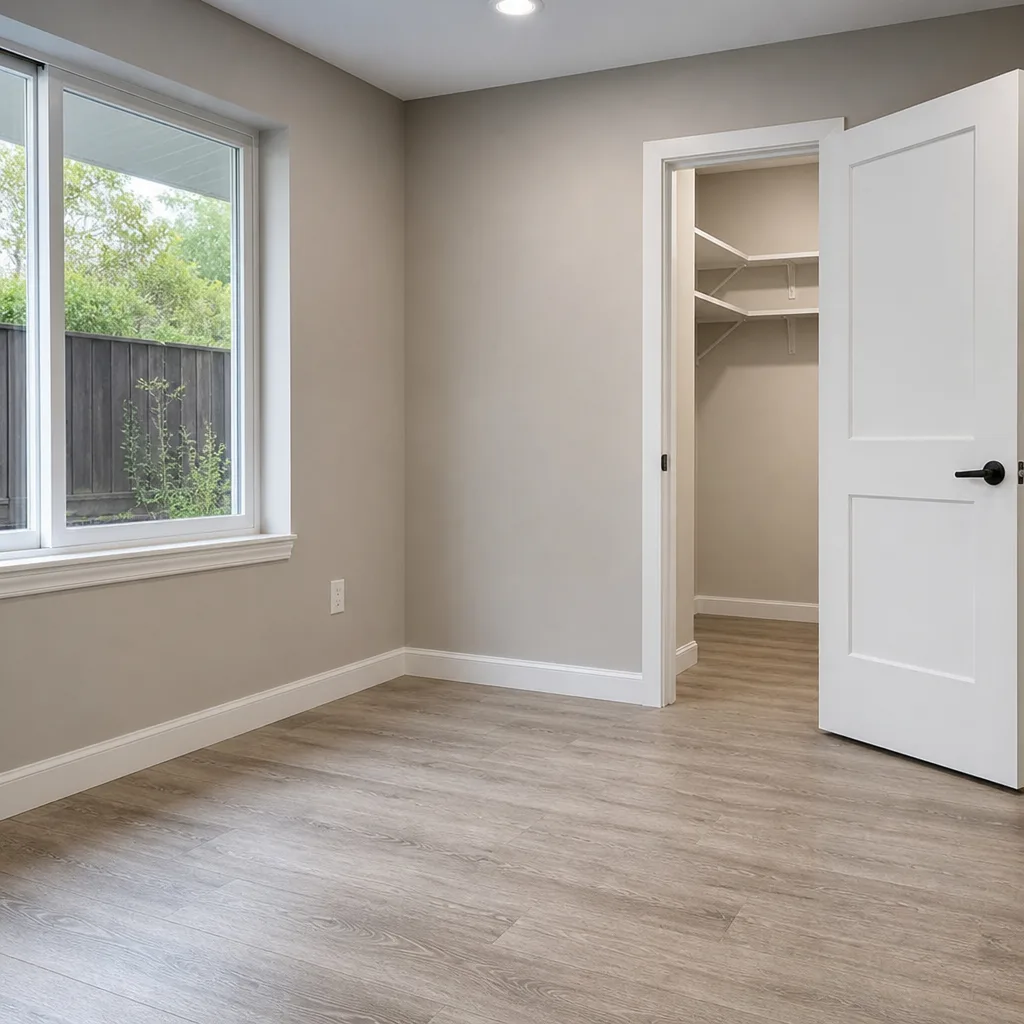 After
After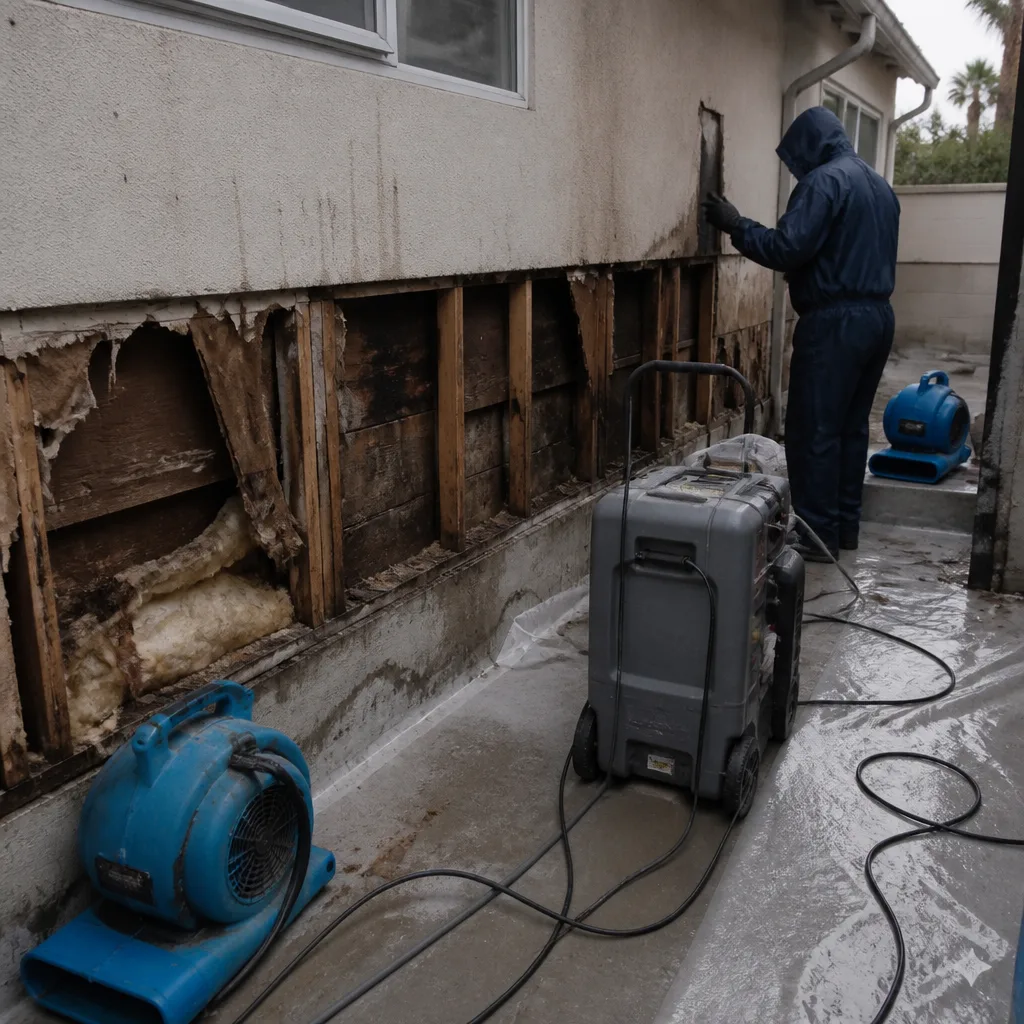 Before
 After
AfterDamage Restoration Warning Signs: A San Diego Homeowner’s Reference Guide
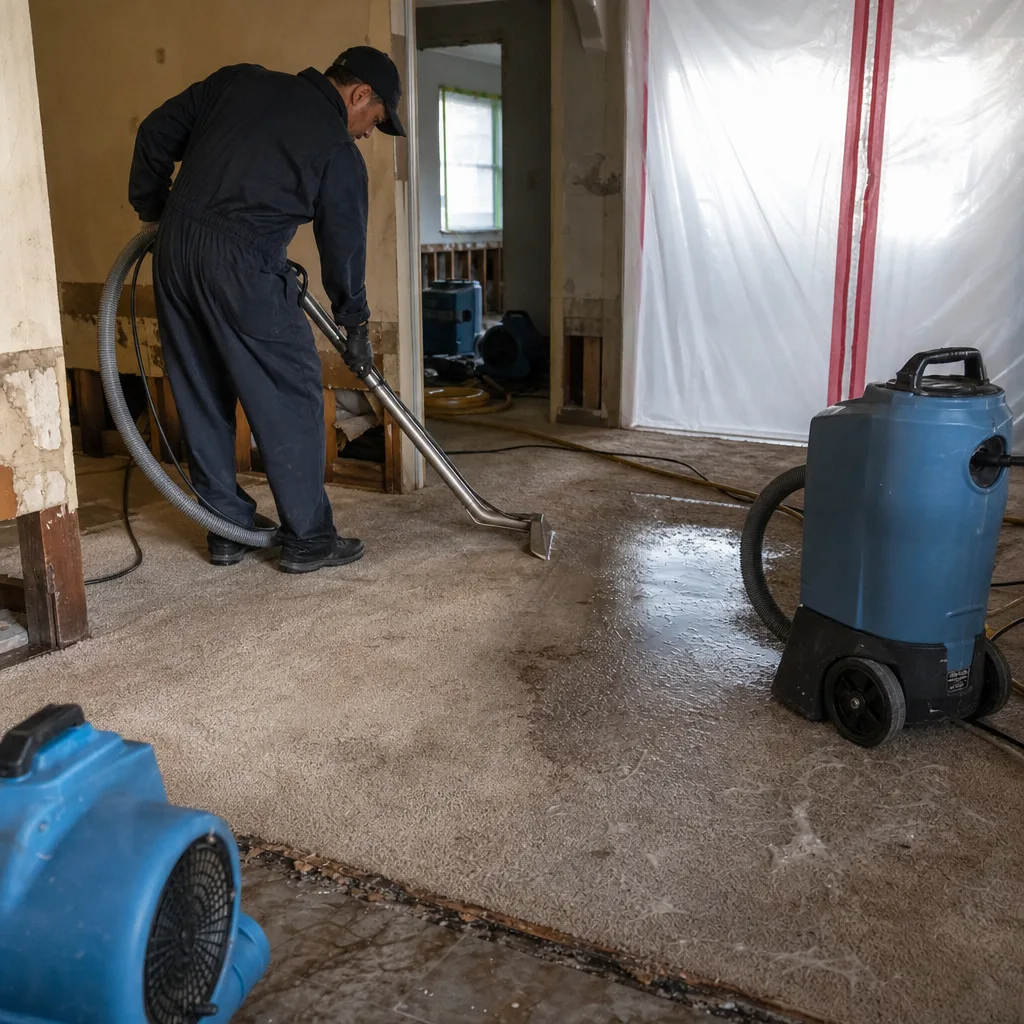
A moisture reading of 18% in a stucco wall cavity reads as dry to the eye and nose, but it is already above the IICRC threshold at which microbial growth becomes probable within 72 hours. In San Diego, where stucco-over-frame construction on slab foundations dominates neighborhoods from Clairemont to Rancho Bernardo, the most expensive water damage we document is typically four to six weeks old before a homeowner notices a stain or smell. This guide teaches you to read the instrument-detectable indicators that matter, before visible symptoms appear.
Quick Answer
Water damage warning signs in San Diego homes fall into two categories: visible symptoms (stains, warping, efflorescence) that appear weeks after the event, and instrument-detectable indicators (elevated moisture readings in stucco cavities, slab expansion joints, and HVAC cabinets) that reveal active intrusion while it is still contained. Homeowners who learn to use a non-invasive pin meter and document readings with dated photos can catch problems during the mitigation window, before microbial growth begins and while insurance coverage is straightforward.
Table of Contents
- Why Visible Signs Fail in San Diego Construction
- The Five Hidden Locations Where Damage Starts Unseen
- Moisture Readings That Separate Active Intrusion From Old Damage
- Why Musty Odor Is a Lagging Indicator in Coastal Homes
- Cosmetic Stain Versus Active Moisture: The Pin Meter Test
- How to Document Warning Signs for a Future Insurance Claim
- San Diego’s Seasonal Patterns: When to Inspect What
- Common Mistakes to Avoid
- When to Call a Professional
- Frequently Asked Questions
BeforeAfterWhy Visible Signs Fail in San Diego Construction
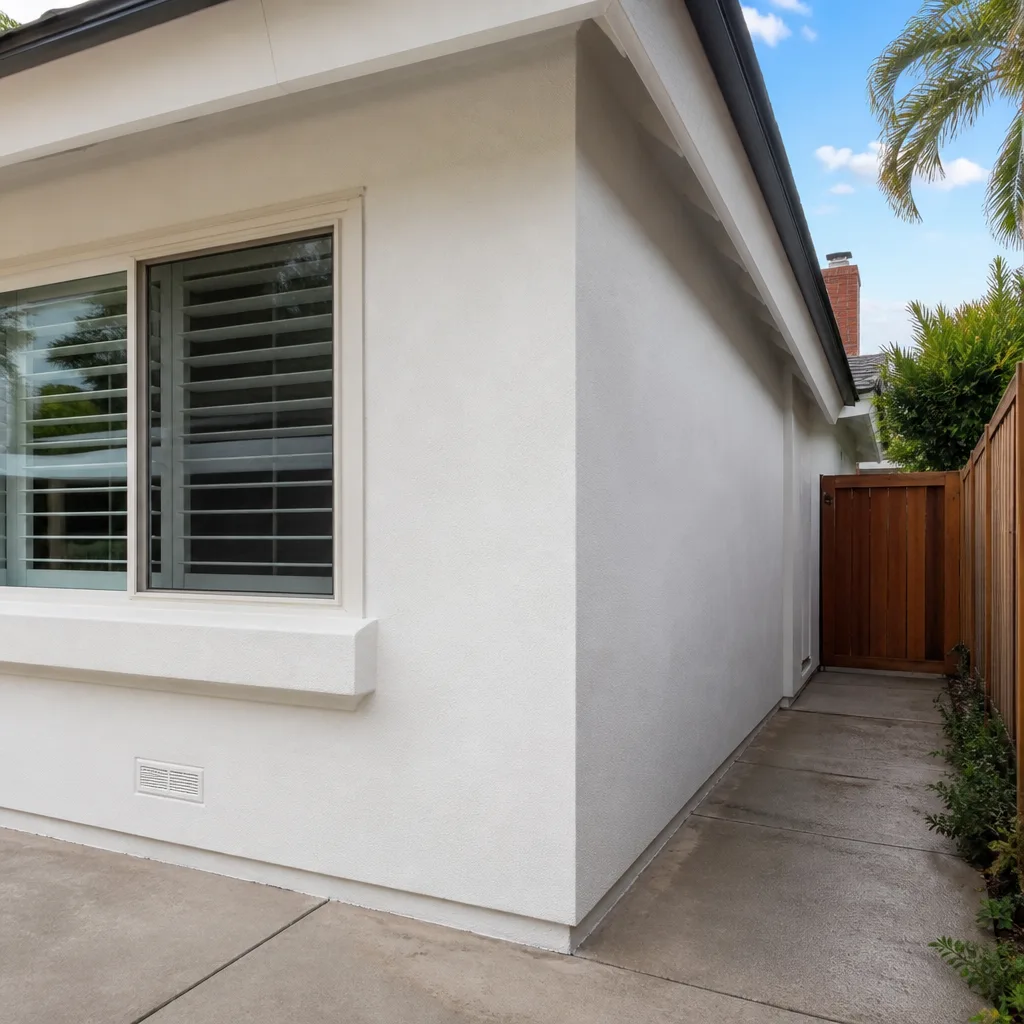
San Diego’s building stock differs from the rest of California in ways that directly affect how damage propagates. Stucco exteriors, wood-frame walls, and slab-on-grade foundations create a specific moisture dynamics profile that conceals problems rather than revealing them.
Stucco is porous. It absorbs rain and irrigation overspray, then releases moisture slowly through evaporation. A stucco wall can read saturated on a pinless moisture meter while appearing normal in color and texture. The moisture travels inward through the paper-backed lath, wetting the stud cavity before any interior drywall shows discoloration. By the time a homeowner sees a water stain on the living room ceiling in a Carmel Valley home, the insulation batts above may have been wet for six weeks.
Slab foundations compound this. Unlike homes with basements or crawl spaces, San Diego slab construction offers no visual access to the underside of the floor system. A failed wax ring under a second-floor toilet in a Scripps Ranch townhome sends water along the subfloor, down wall cavities, and into the garage ceiling below, all without puddling on any surface a homeowner walks across. We have opened slab-adjacent walls in Mira Mesa where the baseplate moisture reading was 34% and the homeowner reported “no problems” because the vinyl plank flooring above looked fine.
The documentation gap is real. Insurance adjusters in San Diego see thousands of claims where the date of loss is disputed because the homeowner cannot establish when the damage started. Visible signs appear too late to answer that question. Instrument readings, documented early, create the timeline that protects your coverage.
Key construction factors in San Diego homes:
- Stucco exteriors with paper-backed lath: moisture wicks inward for weeks before interior signs appear
- Slab-on-grade foundations: no crawl space for early detection of plumbing leaks or groundwater intrusion
- Tile shower pans without waterproofing membranes (common in 1970s-1990s construction): slow failures saturate adjacent framing
- HVAC air handlers in attic or closet locations: condensate drain failures produce concealed moisture loads
- Garage-to-living-space transitions: unsealed slab joints allow driveway runoff intrusion during heavy rains
The Five Hidden Locations Where Damage Starts Unseen
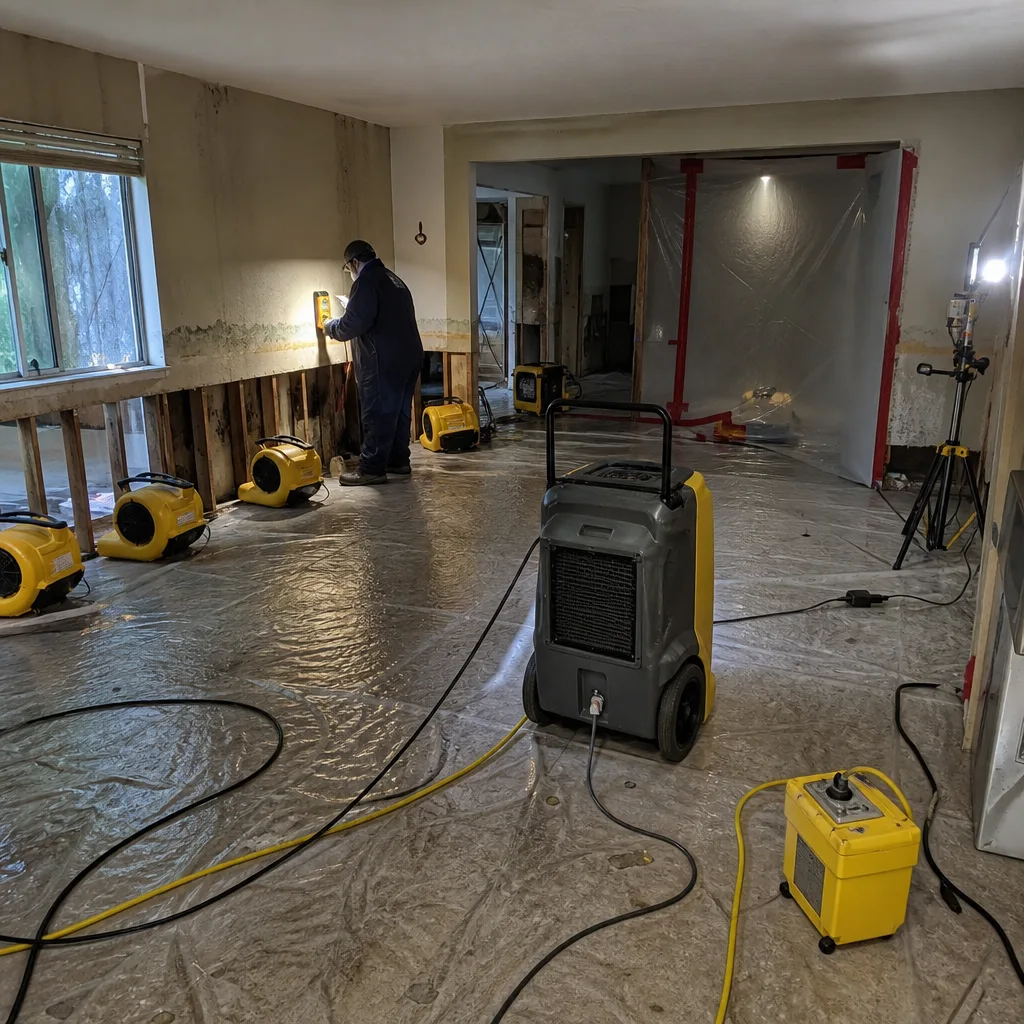
Our moisture mapping records from 12,000+ San Diego homes show consistent patterns. These five locations generate the highest percentage of claims where the damage was advanced before discovery:
1. Under Slab Expansion Joints
Expansion joints in concrete slab floors crack with age and seismic movement. In San Diego’s clay-heavy soils, particularly in areas like Del Mar and Encinitas, seasonal soil expansion and contraction stress these joints. When the joint sealant fails, irrigation water, rainwater from poorly graded hardscaping, or even groundwater can migrate beneath the slab. The first sign is often a persistent efflorescence bloom on garage floors or a slight lifting of flooring at the slab perimeter. A pinless moisture meter reading above 12% on concrete in a dry week indicates active vapor transmission, not residual construction moisture.
2. Behind Stucco Kick-Out Flashings
Kick-out flashings at roof-to-wall intersections direct water into gutters. When omitted or improperly installed, a common finding in 1980s and 1990s San Diego construction, water runs behind the stucco and collects at the base of wall cavities. We regularly find saturated sheathing in La Jolla and Pacific Beach homes where the interior paint looks pristine. The only early warning is a moisture reading spike at the base of exterior walls during or within 48 hours of rain.
3. Inside HVAC Air Handler Cabinets
San Diego’s mild climate means air conditioning runs intermittently, which is harder on condensate drainage systems than continuous operation. Condensate pans rust, drain lines clog with biofilm, and float switches fail. Water overflows the cabinet, saturates the platform or closet floor, and wicks into adjacent walls. Because the closet door stays closed and the system cycles on and off, homeowners often discover this only when the drywall corner outside the closet softens or a musty odor emerges from the return air path.
4. Beneath Tile Shower Pans
Traditional mortar-bed shower pans without bonded waterproofing membranes were standard in San Diego construction through the 1990s. The pan liner beneath the mortar bed is the actual waterproofing; if it punctures or the weep holes clog, the mortar bed becomes a reservoir that stays wet continuously. Adjacent framing absorbs this moisture, and because tile and grout are vapor-permeable, the wet condition persists for years. We have demolished showers in Point Loma where the curb framing read 40% moisture and showed no visible mold because the constant moisture suppressed spore release.
5. Garage-to-Living-Space Transitions
San Diego’s sloped lots, common in Mission Hills and University Heights, often position garages partially below grade on the uphill side. The transition from garage slab to living space framing is frequently unsealed. During heavy winter storms or when irrigation systems overwater uphill landscaping, water enters at this joint and travels along the slab edge into wall baseplates. The garage side shows nothing because it is often unfinished; the living space side shows baseboard swelling or flooring cupping only after weeks of saturation.
Moisture Readings That Separate Active Intrusion From Old Damage
Not all elevated moisture readings indicate an active problem. Construction materials hold residual moisture from the building process, and San Diego’s coastal humidity affects baseline readings. The skill is distinguishing active intrusion from historical, dried damage.
We use three reference frameworks on every water damage restoration in San Diego job:
| Material | Dry Standard (San Diego Climate) | Active Intrusion Threshold | Microbial Growth Risk Zone |
|---|---|---|---|
| Softwood framing (pine, fir) | 8-11% | 15% or rising between readings | 18%+ sustained 72+ hours |
| OSB/plywood subfloor | 10-13% | 17% or rising between readings | 20%+ sustained 72+ hours |
| Drywall (paper face) | 5-8% | 12% or localized elevation | 15%+ with organic substrate |
| Stucco (exterior, pinless) | 10-14% | 18% during dry weather | 22%+ with interior cavity access |
| Concrete slab (pinless, RH%) | 75-80% RH | 85% RH with seasonal correlation | 90% RH with vapor barrier failure |
The critical distinction is trend, not absolute value. A single reading of 16% in softwood framing during Santa Ana conditions might represent temporary humidity absorption. The same reading taken three days apart, with the second reading higher, indicates active moisture addition from a source. We document this with psychrometric data: temperature, relative humidity, and vapor pressure differential, which is the force that drives moisture from wet materials to dry air.
Vapor pressure differential, measured in inches of mercury, tells us whether the drying environment is actually pulling moisture from the material. A wet material in humid air can stay wet indefinitely despite active air movement. This is why we see failed DIY drying attempts in San Diego beach communities, where homeowners run fans without dehumidification and the coastal humidity keeps vapor pressure near equilibrium. For a deeper look at when professional help is worth the cost, see our DIY vs Professional Damage Restoration: The San Diego Homeowner’s Decision Guide.
For homeowners, the practical application is simple: take a reading, mark the location with tape, and repeat in 48 hours. A rising trend means active intrusion. A stable or falling trend means the source is likely historical or resolved. Document both readings with dated photos.
Why Musty Odor Is a Lagging Indicator in Coastal Homes
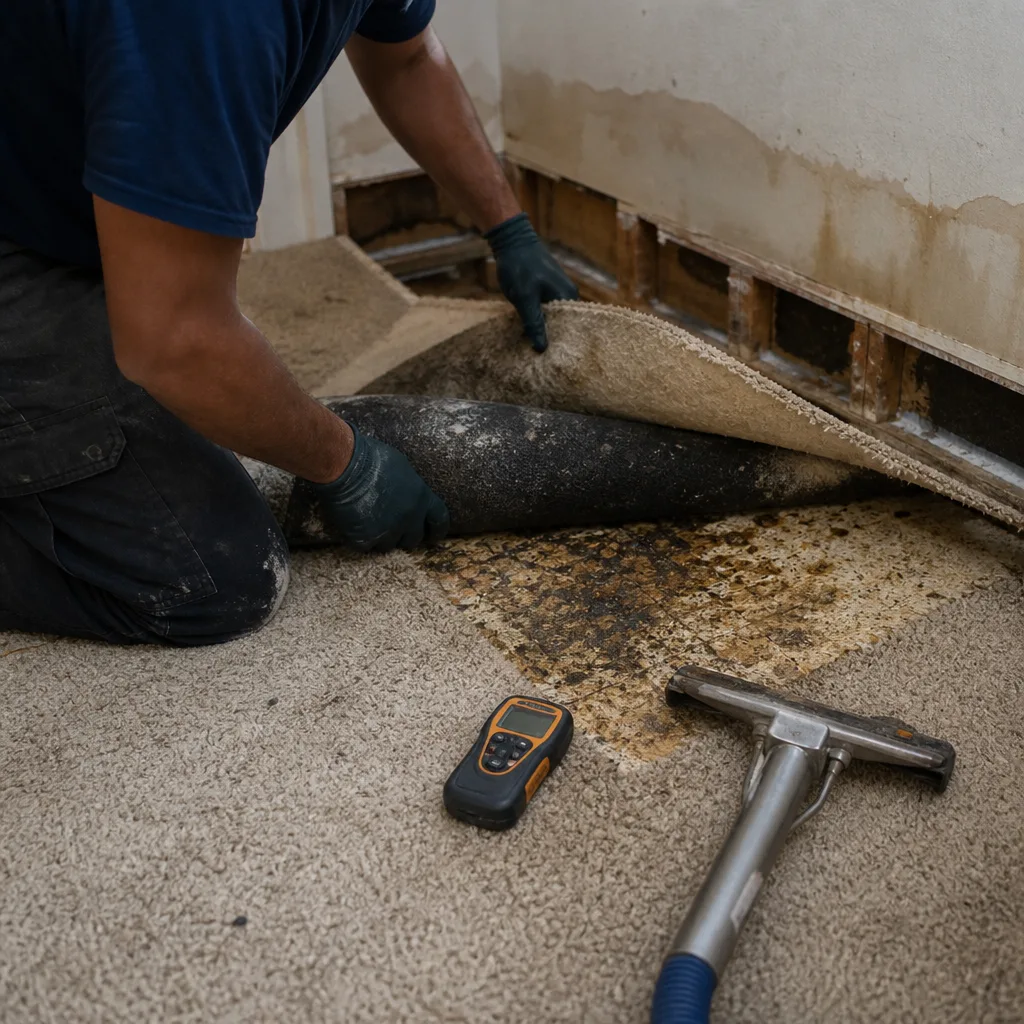
Musty odor triggers most mold-related calls we receive in San Diego. It is also the least useful warning sign because it arrives late in the damage timeline.
Microbial volatile organic compounds (MVOCs), the chemicals that produce musty odor, require established colonization to reach detectable concentrations. In San Diego’s coastal climate, where ambient humidity moderates temperature swings, this colonization proceeds slowly and steadily. A moisture event in January may not produce noticeable odor until March. By then, the damage has progressed from a simple water intrusion to a mold remediation in San Diego scenario with more complex scope, higher cost, and more involved insurance documentation.
The specific lag varies by location. Homes within two miles of the coast, in neighborhoods like Ocean Beach and Cardiff, experience higher baseline humidity that suppresses evaporation and extends the odor-development window. Inland valleys, from El Cajon to Poway, see faster drying and earlier odor detection, but also more extreme temperature swings that can conceal moisture behind condensation events.
What to measure instead:
- Relative humidity in suspect cavities: Insert a humidity probe through a small access hole in drywall at baseplate level. Readings above 65% RH in a wall cavity during dry weather indicate concealed moisture.
- Surface temperature differentials: An infrared thermometer reveals cooler spots where evaporative cooling is active. A 3°F differential from surrounding surfaces suggests moisture evaporation at that location.
- Air handler cabinet and drain pan: Check the secondary drain pan monthly during cooling season. Any standing water indicates a primary drain line problem that will eventually overflow.
- Slab perimeter after rain events: Scan the garage floor and any exposed slab edges with a pinless meter within 24 hours of significant rain. Elevated readings that persist for 48 hours indicate subsurface moisture migration.
If you detect musty odor, the damage is already established. The question is no longer prevention but documentation for proper remediation scope and insurance coverage.
Cosmetic Stain Versus Active Moisture: The Pin Meter Test
Not every stain on a ceiling or wall indicates active damage. San Diego homes accumulate cosmetic marks from past leaks that were repaired, from condensation events that self-resolved, or from construction moisture that dried years ago. The pin meter test distinguishes these from problems requiring professional intervention.
A non-invasive pinless moisture meter sends electromagnetic signals into the material and measures the return to estimate moisture content. For homeowners, the Delmhorst BD-2100 or similar dual-mode meters provide sufficient accuracy. The procedure:
- Test an unaffected area of the same material type to establish a baseline reading for that room.
- Test the stained area, holding the meter flat against the surface.
- Test 6-12 inches adjacent to the stain to identify the moisture gradient.
- Record all readings with the date, location, and meter model.
Interpretation for San Diego homes:
- Stained area reads within 2% of baseline: likely cosmetic, historical stain. Monitor annually.
- Stained area reads 3-5% above baseline with flat gradient: residual moisture from past event, possibly still drying. Re-test in one week.
- Stained area reads 5%+ above baseline with rising gradient toward a specific point: active moisture source. Document and call for moisture mapping.
- Stained area reads high but gradient falls toward the stain: the stain may be the drying front, with the source elsewhere. Requires professional tracing.
The limitation of pinless meters is depth. They read approximately 3/4 inch into most materials, which misses moisture at the back of a 5/8-inch drywall panel or in the stud cavity behind it. When the pinless meter shows elevation near a suspect area, a professional moisture mapping session with invasive probes and thermal imaging is the next step. This produces the room-by-room documentation that satisfies insurance documentation requirements and forms the basis of a written scope under Haven Standard, Clause 1.
How to Document Warning Signs for a Future Insurance Claim
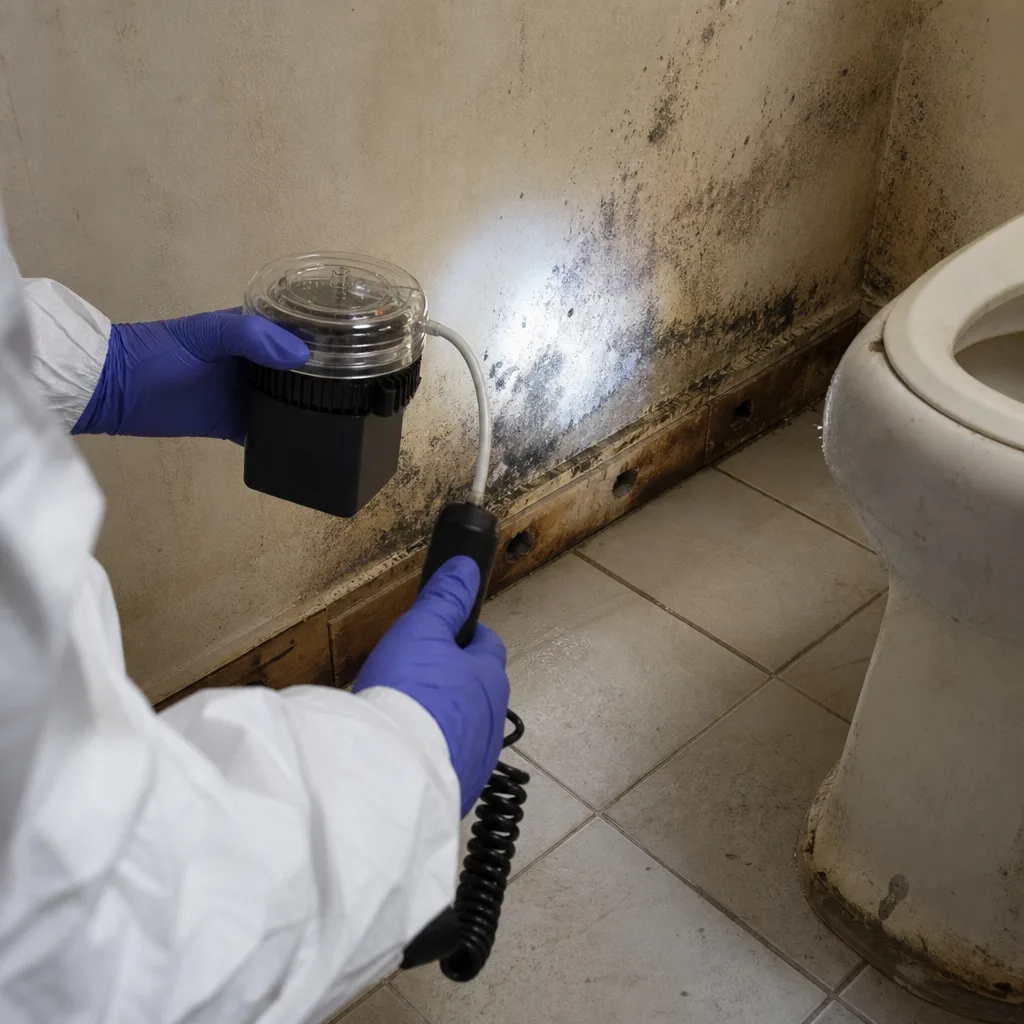
The most common reason San Diego homeowners lose coverage disputes is inability to establish the date of loss and the progression of damage. Insurance policies cover sudden and accidental events, not long-term maintenance failures. Documentation that creates a clear timeline is the difference between a paid claim and a denied one.
We built Back to Dry’s documentation protocols around this gap, which founder Alicia Brennan observed repeatedly during her years as a claims adjuster. The Haven Standard requires photo-documented assessments on every visit because we have seen what sloppy documentation costs a homeowner.
Homeowner documentation protocol:
- Photograph the warning sign in context. Include enough of the surrounding area to establish location: a wall corner with baseboard visible, a ceiling stain with light fixture for reference, a garage floor with vehicle or storage items for scale.
- Photograph the moisture meter display with the reading visible. Include the material being tested in the same frame.
- Record the date, time, weather conditions, and any recent events. “March 15, 2024, 9:15 AM, 68°F and clear, three days after 1.2 inches rain on March 12.” This establishes correlation with a specific weather event.
- Store in a dedicated folder with naming convention: YYYY-MM-DD_Location_Reading.jpg. This chronological organization is immediately usable if a claim arises.
- Repeat readings at documented intervals: 48 hours, one week, two weeks, then monthly if stable.
If readings trend upward, or if any reading exceeds the microbial growth risk zone in the table above, the documentation package becomes evidence of a sudden event that requires professional assessment. The dated photos and readings support a claim that the damage was discovered promptly and was not a long-term maintenance issue.
Our standard deliverable on every job includes this documentation as a matter of course: the photo record, the drying log with daily moisture readings, the written scope with line-item pricing, and the signed 365-Day Done Right Promise. We do not offer these as upsells because they are the foundation of a payable claim.
San Diego’s Seasonal Patterns: When to Inspect What
San Diego’s climate is mild, but it is not uniform. Seasonal Damage Restoration Care for San Diego: Year-Round Homeowner’s Guide explains how seasonal patterns create specific risk windows that informed homeowners can anticipate.
October through April: Winter Storm and Santa Ana Pattern
Rain events, though individually modest, often arrive in clusters that overwhelm drainage systems. The first rains after dry summers flush debris into gutters and downspouts, causing overflows at kick-out flashings and roof edges. Santa Ana wind events follow, driving rain into stucco through windward-facing walls that would not leak in calm conditions. Inspect after the first significant rain: check attic access hatches for drip marks, scan garage slab perimeters with a pinless meter, and verify downspout discharge points are clear.
May through September: Irrigation and Condensate Season
Landscape irrigation increases, and aging sprinkler systems misdirect water against stucco walls. Air conditioning runs peak, and condensate drain lines that were dormant for months clog with biofilm or insect nests. The specific risk is the first sustained heat wave, when systems cycle heavily after months of disuse. Check the air handler cabinet and secondary drain pan weekly during the first month of cooling operation.
Year-Round: Slab and Plumbing Stress
San Diego’s water hardness and aging copper and galvanized plumbing create pinhole leaks and joint failures that are independent of season. Slab leaks are particularly insidious: water escapes under pressure, follows the pipe trench, and surfaces unpredictably. The warning sign is often a warm spot on a tile floor (hot water leak) or an unexplained increase in water usage. We recommend quarterly meter checks: turn off all water, note the meter reading, and recheck in two hours. Any movement indicates a leak.
Common Mistakes to Avoid
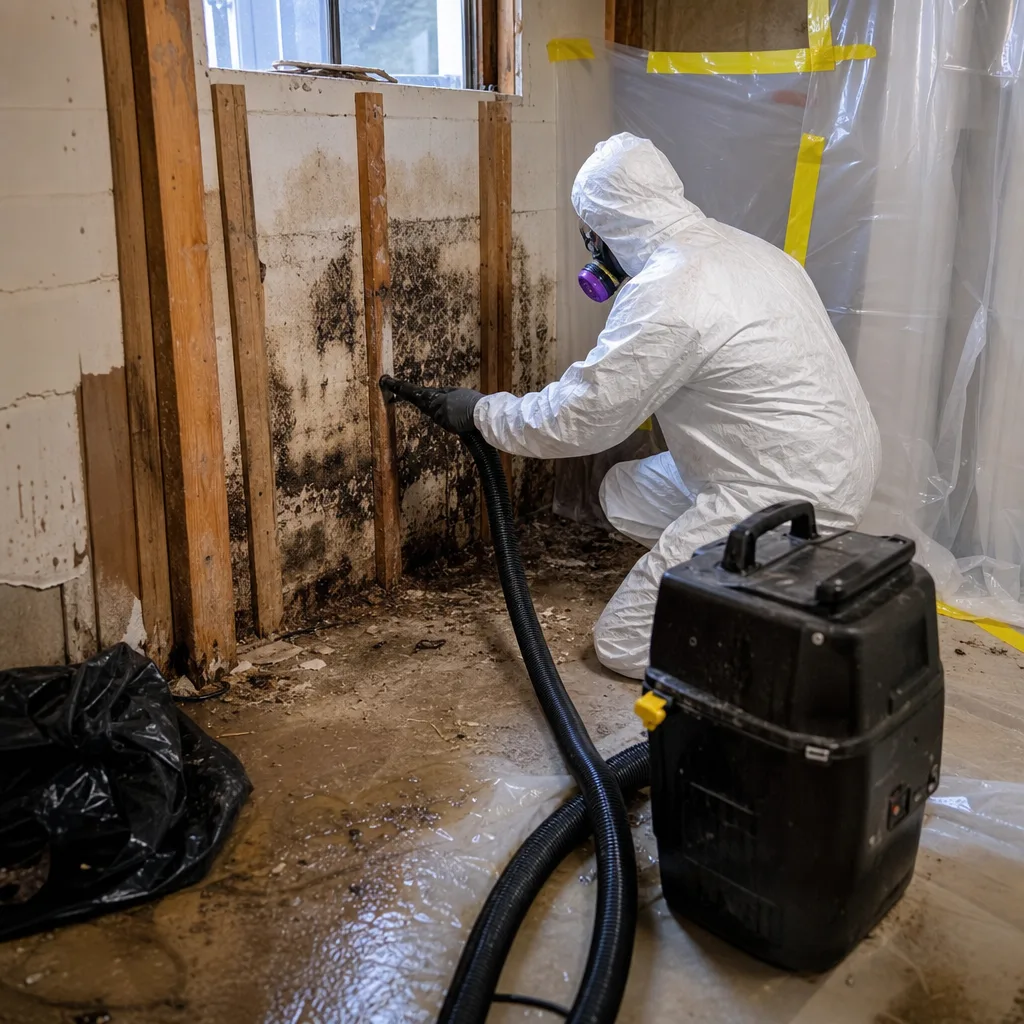
- Waiting for visible mold before acting. Mold is a symptom, not the problem. By the time mold is visible, the underlying moisture has been present long enough to compromise structural materials and trigger complex remediation protocols. Measure moisture, not mold.
- Assuming stucco discoloration is “just aging.” Stucco efflorescence, the white powdery deposit, indicates soluble salts being transported by water movement. It is a moisture indicator, not a cosmetic issue. Test the wall cavity behind it.
- Using bleach on suspected mold. Bleach does not penetrate porous materials and can add moisture that worsens the problem. It also destroys the visual evidence that a remediation professional needs to assess scope. Document first, treat with appropriate methods.
- Ignoring garage and exterior storage areas. These spaces are often unconditioned and uninspected, but they share walls and air pathways with living spaces. A wet garage wall in a San Diego canyon home is a wet living space wall waiting to be discovered.
- Failing to correlate readings with weather events. A moisture reading without a date and weather context is nearly useless for insurance purposes. The correlation between a specific rain event and a specific reading spike establishes sudden damage versus gradual failure.
- Accepting “dry to the touch” as dry. Human touch detects surface moisture at approximately 30% wood moisture content, well above the microbial growth threshold. Instruments detect what hands cannot.
When to Call a Professional
Call for professional moisture mapping when: pinless meter readings exceed active intrusion thresholds and are trending upward; you find moisture in multiple locations without an obvious source; musty odor is present regardless of visible findings; or you need documentation for an insurance claim. If you’re unsure how to choose a qualified company, read our How to Hire a Damage Restoration Contractor in San Diego: A Step-by-Step Guide.
DryMark Restoration San Diego offers free estimates in San Diego. Our assessments include photo-documented moisture readings, a written scope with line-item pricing before any work begins, and direct coordination with your insurance adjuster if a claim is indicated. Call (619) 330-9541. We answer live, 24 hours a day, 7 days a week, with no voicemail on emergency lines.
Frequently Asked Questions
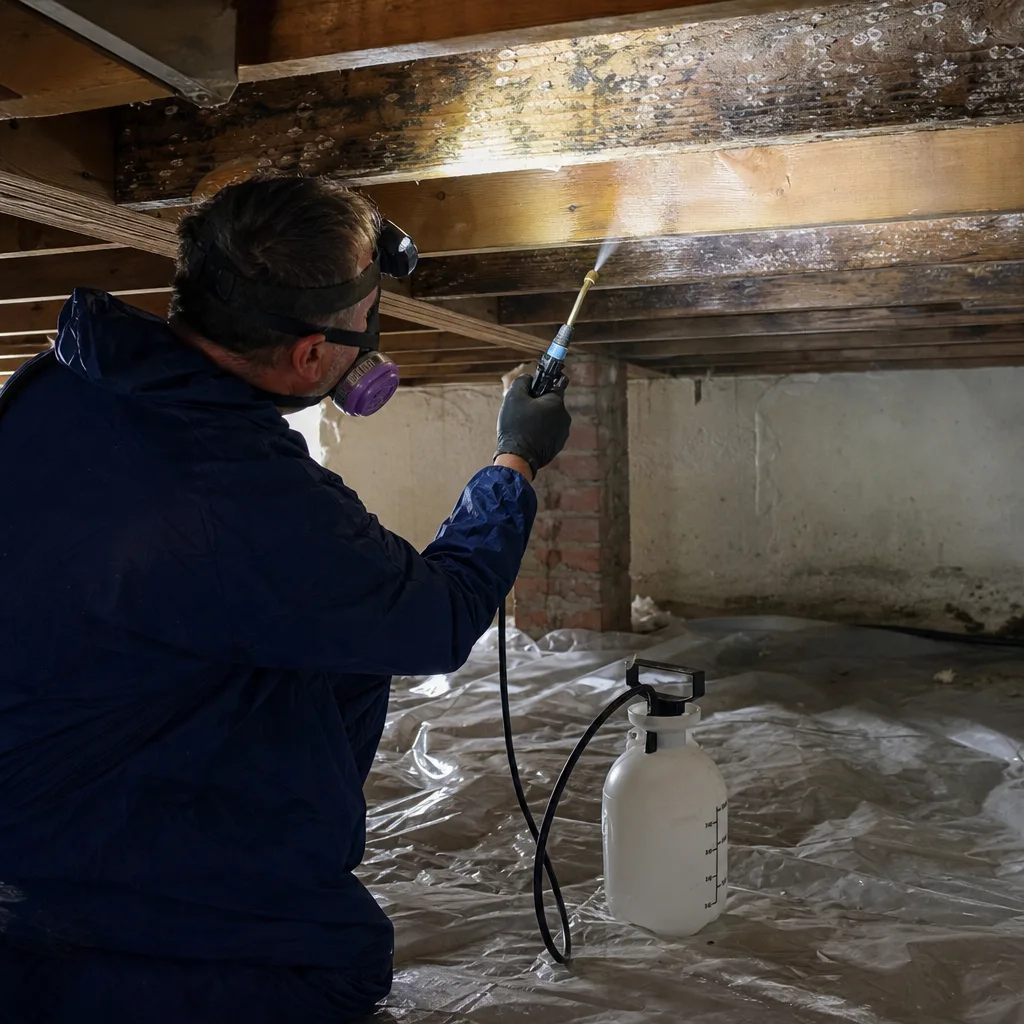
Most reputable restoration companies, including DryMark Restoration San Diego, provide initial moisture assessments at no charge for homeowners. The assessment includes pin and pinless meter readings, thermal imaging, and a written findings report. If the problem requires mitigation, the assessment cost is typically absorbed into the job scope. Call (619) 330-9541 for an exact quote on your situation.
Coverage depends on demonstrating that the damage resulted from a sudden, accidental event and was discovered promptly. Documented moisture readings with dates, correlated with a specific weather event or plumbing failure, support this claim. Insurance generally does not cover long-term maintenance failures or gradual deterioration. The photo record and dated readings you create are the evidence that distinguishes covered sudden damage from excluded gradual damage.
DryMark Restoration San Diego answers calls live, 24 hours a day, 7 days a week, with no voicemail on emergency lines. Response time depends on current call volume and your location within our service area, but we dispatch background-checked, uniformed technicians with documented license verification. For active water intrusion, speed matters: microbial growth becomes probable within 72 hours of moisture exceeding threshold levels. Call (619) 330-9541 to confirm current availability.
Visible mold indicates established colonization, which means the moisture source has been present long enough to affect concealed materials as well. Cleaning visible surfaces without addressing concealed growth and the moisture source typically results in recurrence within weeks. Professional remediation includes moisture source identification, containment of affected areas, removal of colonized materials, and verified drying to established standards. We provide a written scope before work begins so you understand exactly what is included and why.
At DryMark Restoration San Diego, we coordinate directly with your adjuster, providing the photo documentation, daily drying logs, and written scopes that satisfy documentation requirements. Our protocols follow IICRC, RIA, and IFA standards, producing the instrument-verified records that turn restoration invoices into payable claims. You are not responsible for translating our work into adjuster language; we handle that as part of our standard process.
A dual-mode pinless/pin meter such as the Delmhorst BD-2100 or Protimeter Surveymaster provides sufficient accuracy for homeowner monitoring. Expect to spend $300-$500 for a reliable unit. Pinless mode is non-destructive and suitable for initial screening; pin mode provides precise wood moisture readings when the pinless mode indicates elevation. Calibrate annually or after significant drops. The investment pays for itself if it catches one moisture problem before it requires remediation.
The Bottom Line
In San Diego’s stucco-and-slab construction, the warning signs that matter are the ones you measure, not the ones you see. A moisture reading of 18% in a wall cavity, a humidity probe showing 67% RH behind a closet, a slab perimeter that spikes after rain: these are the indicators that arrive in time to act. Visible stains and musty odors arrive too late. The homeowner who documents instrument readings with dated photos builds the timeline that protects both the structure and the insurance claim. The tools are inexpensive, the procedure is straightforward, and the alternative is damage that progresses unseen until it becomes expensive, complex, and disputed. Explore more guides & resources to protect your home.
Written by Alicia Brennan, Owner at DryMark Restoration San Diego, serving San Diego since 2011.