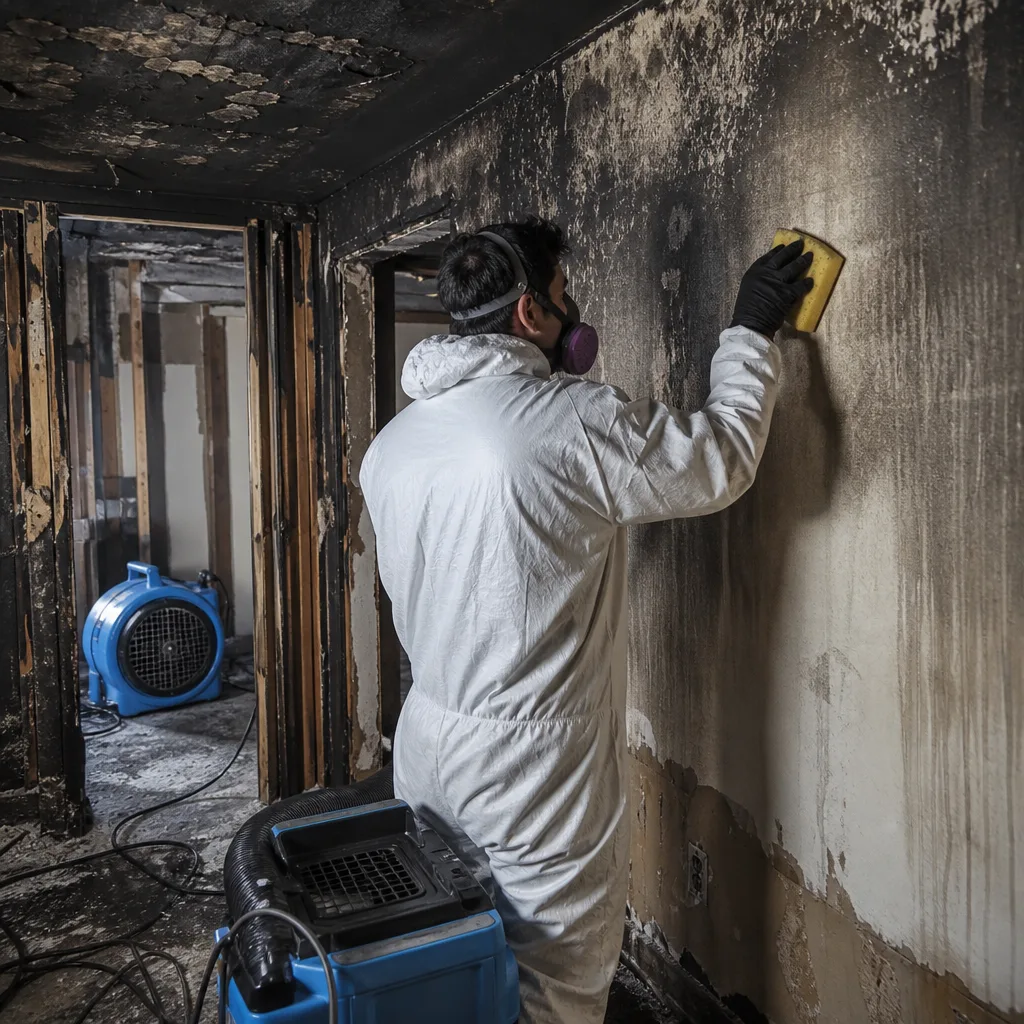
Free visual inspection and a written scope of work before any mitigation begins - photos, moisture readings, and drying logs go in your claim file
The scope we write is the scope we bill. Anything new gets shown to you, in writing, before we touch it.
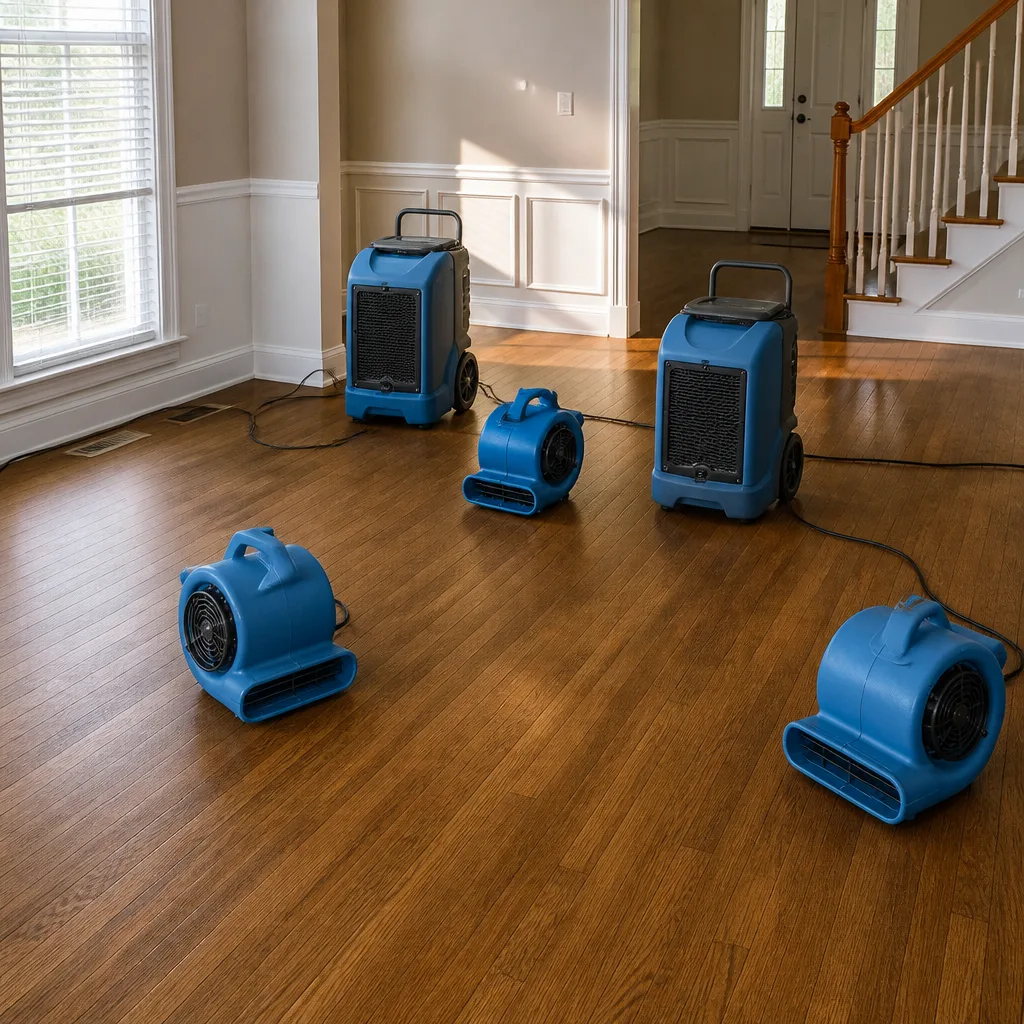
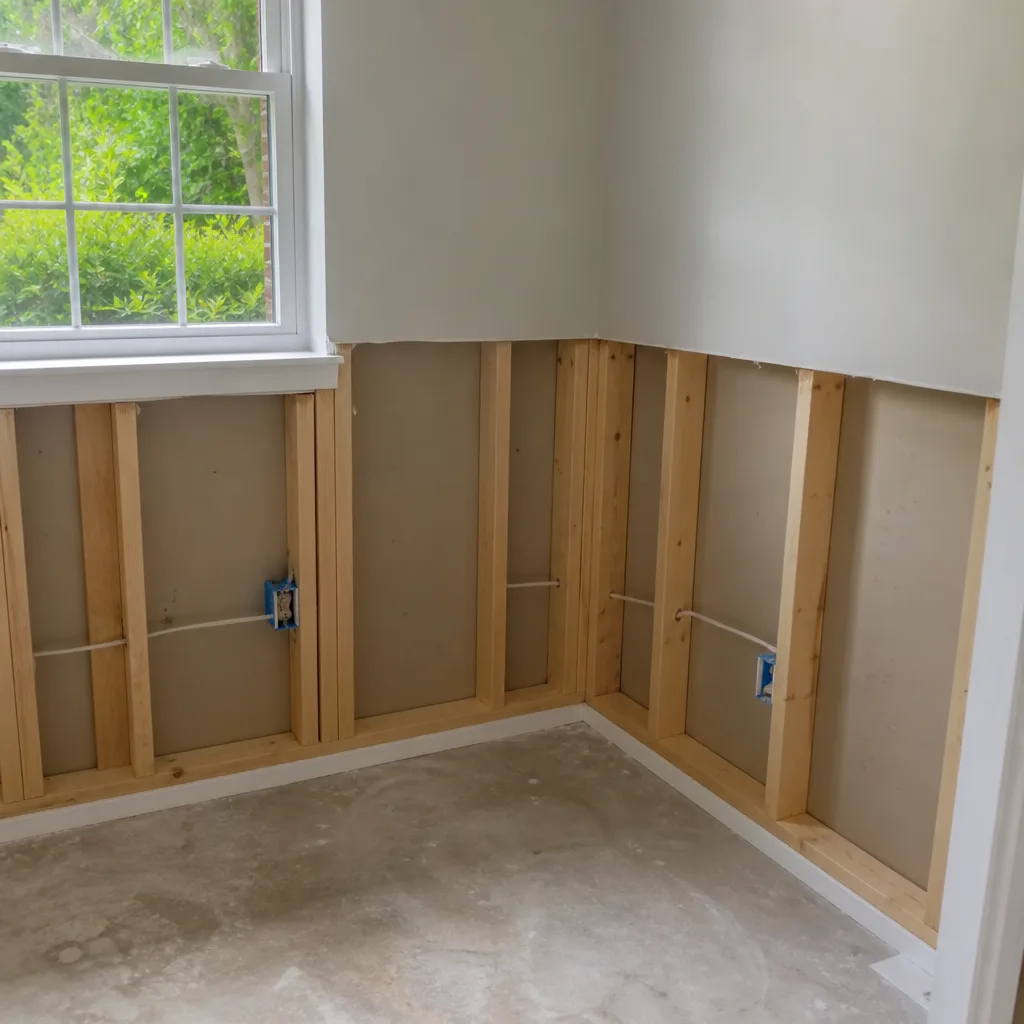

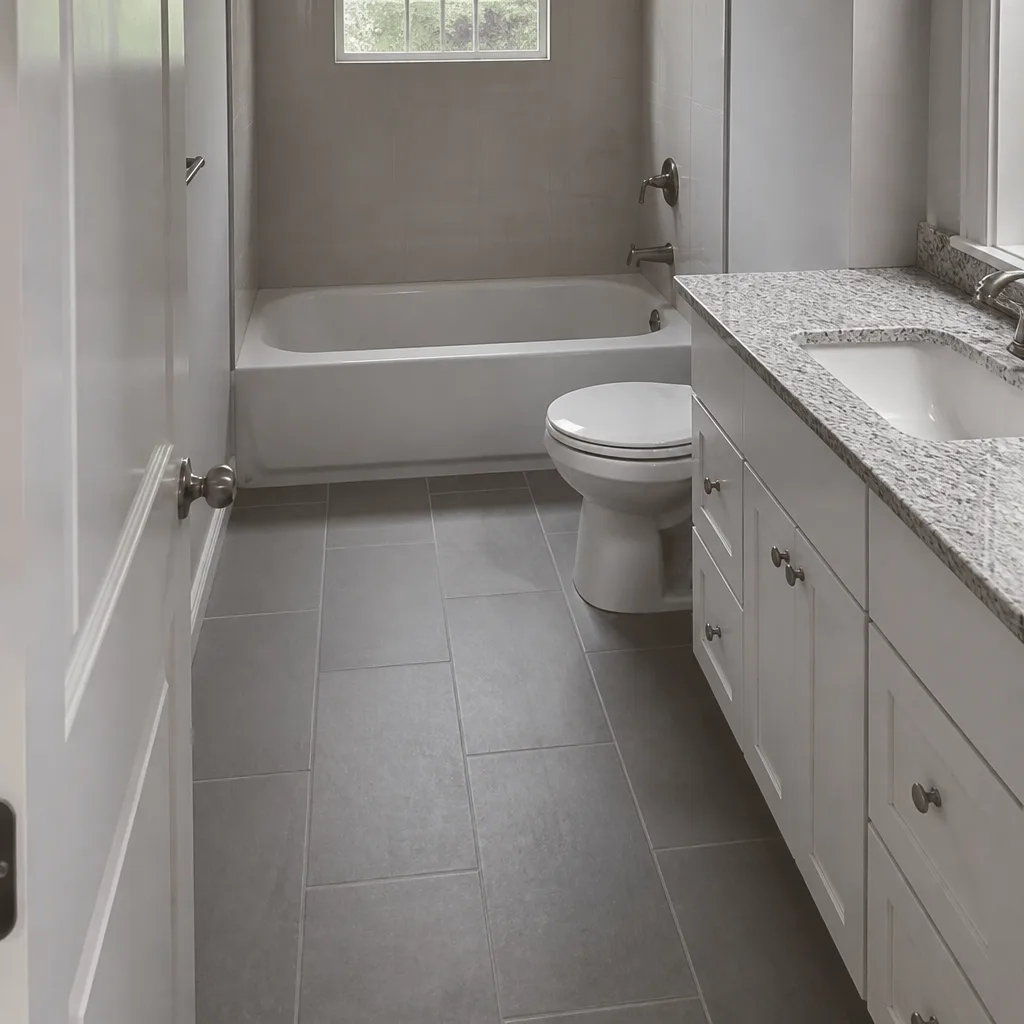

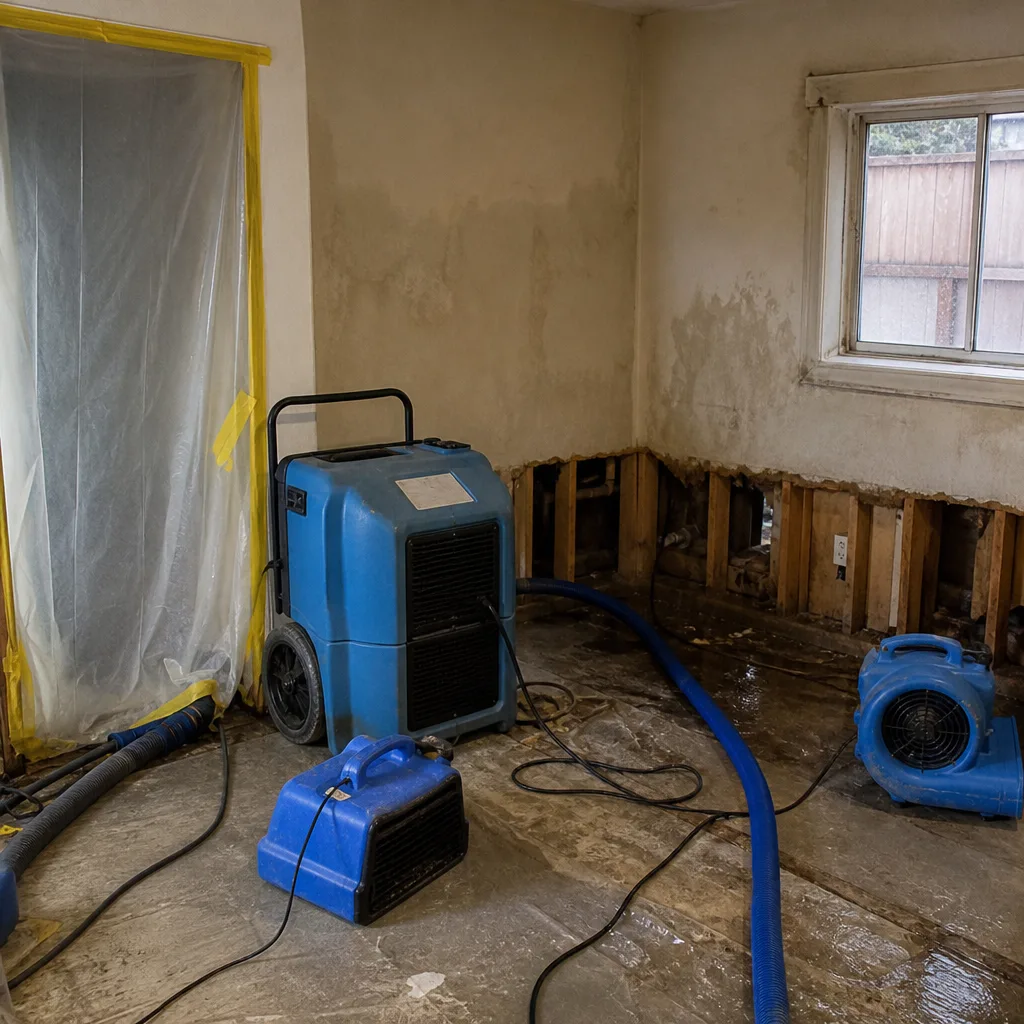 Before
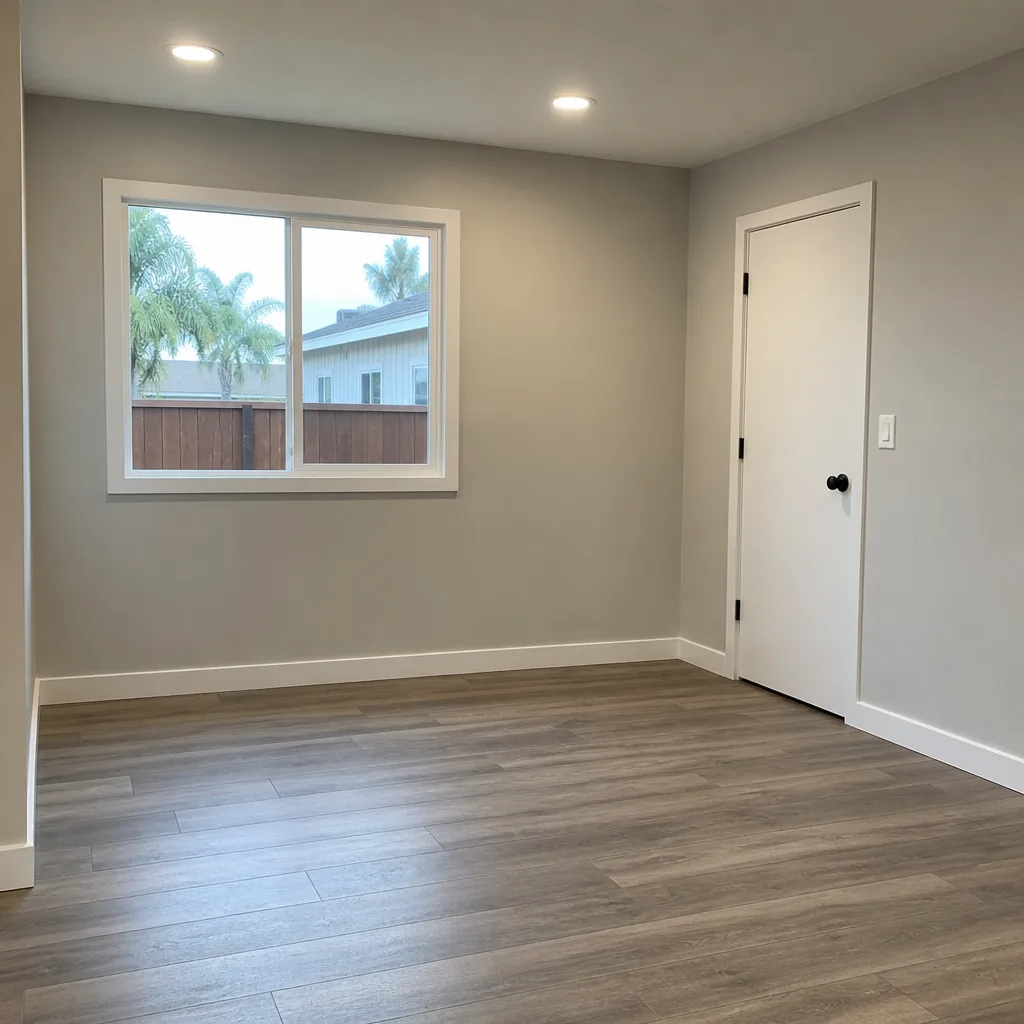 After
After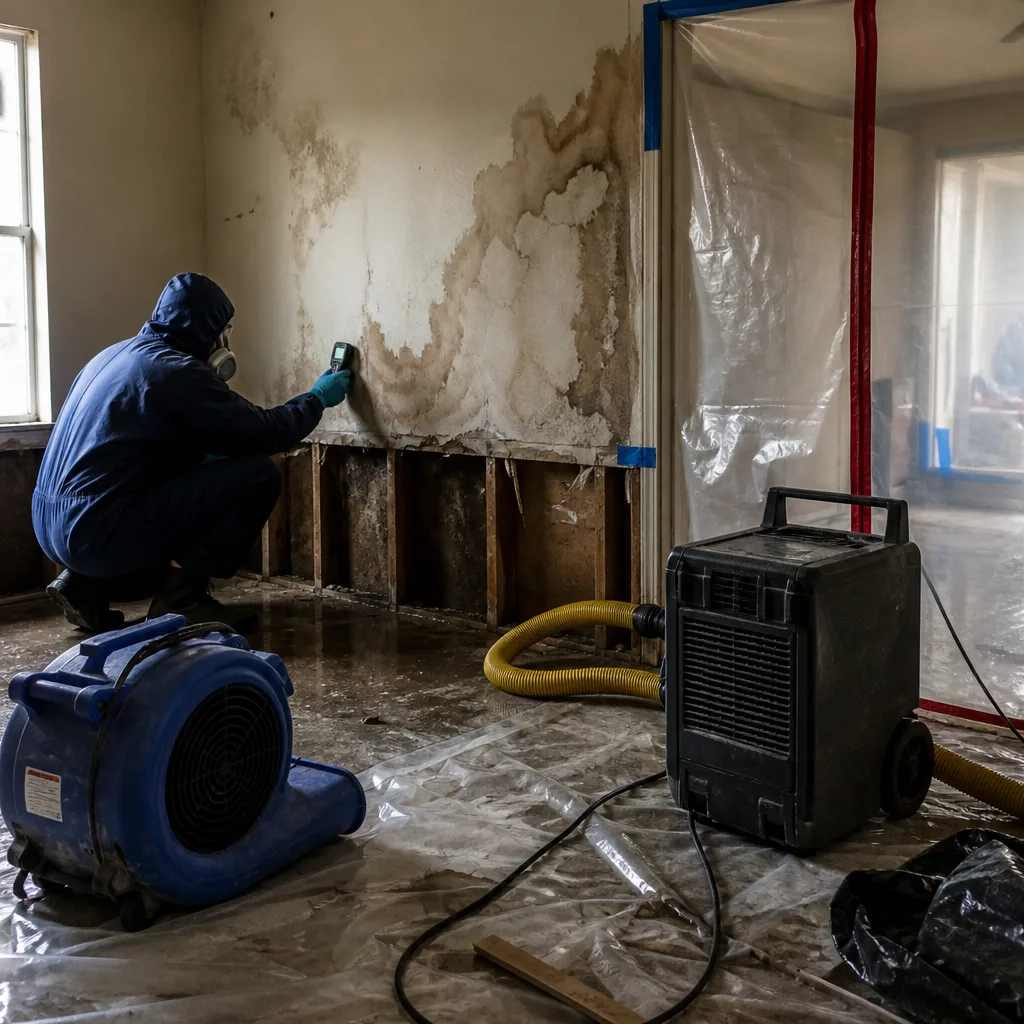 Before
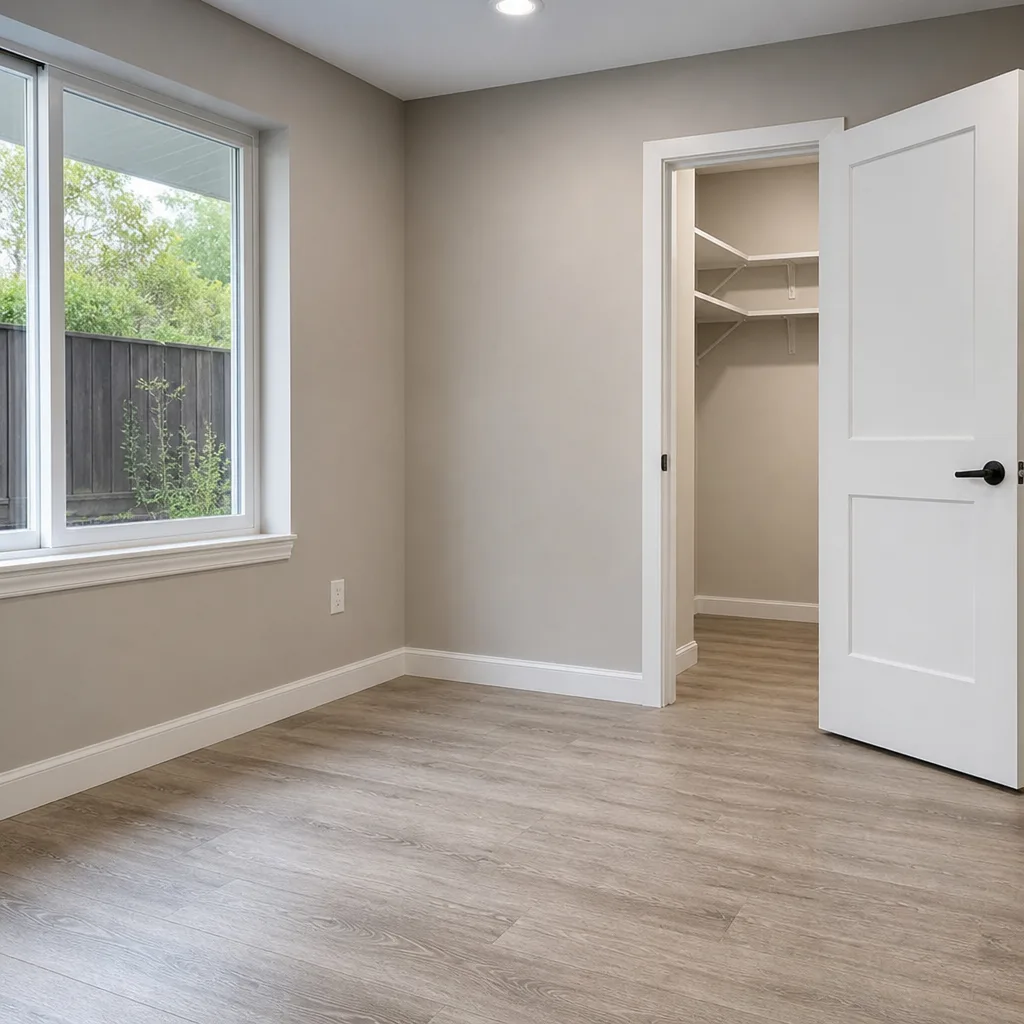 After
After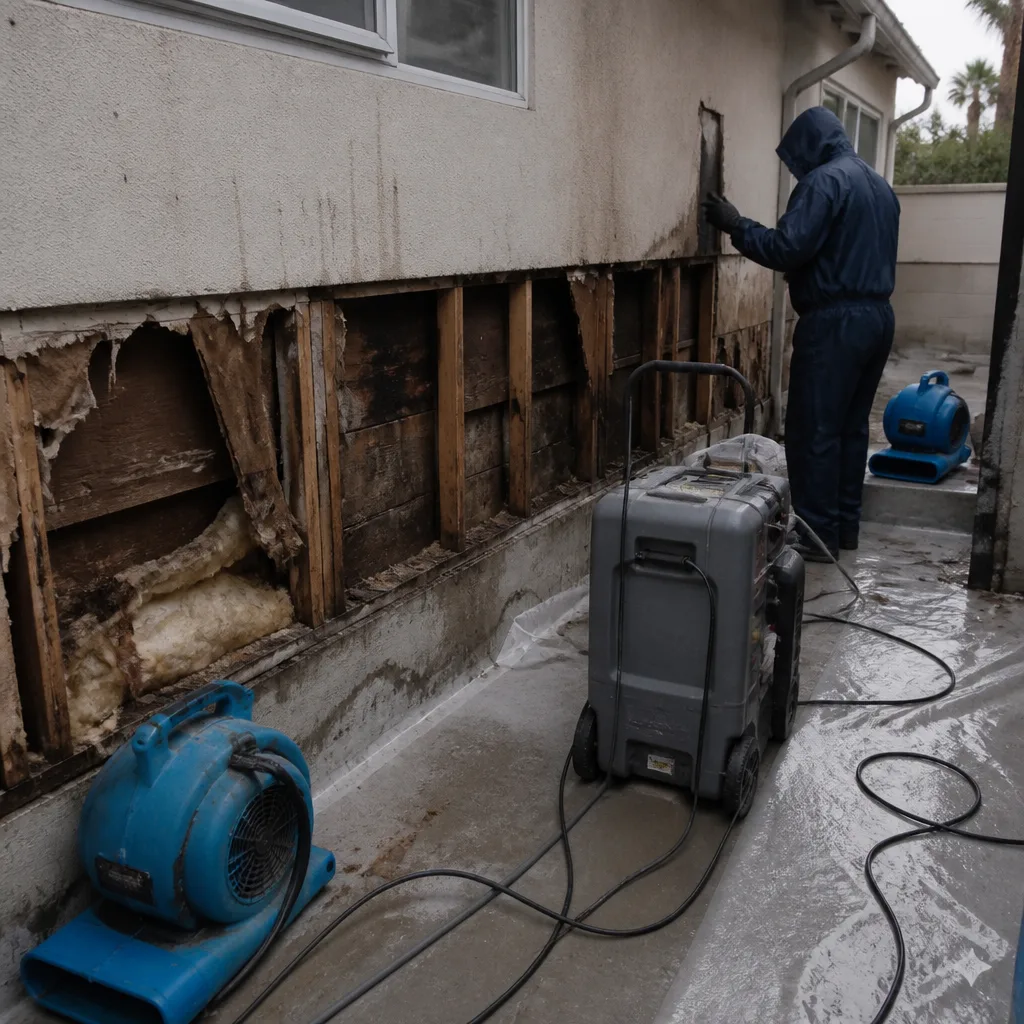 Before
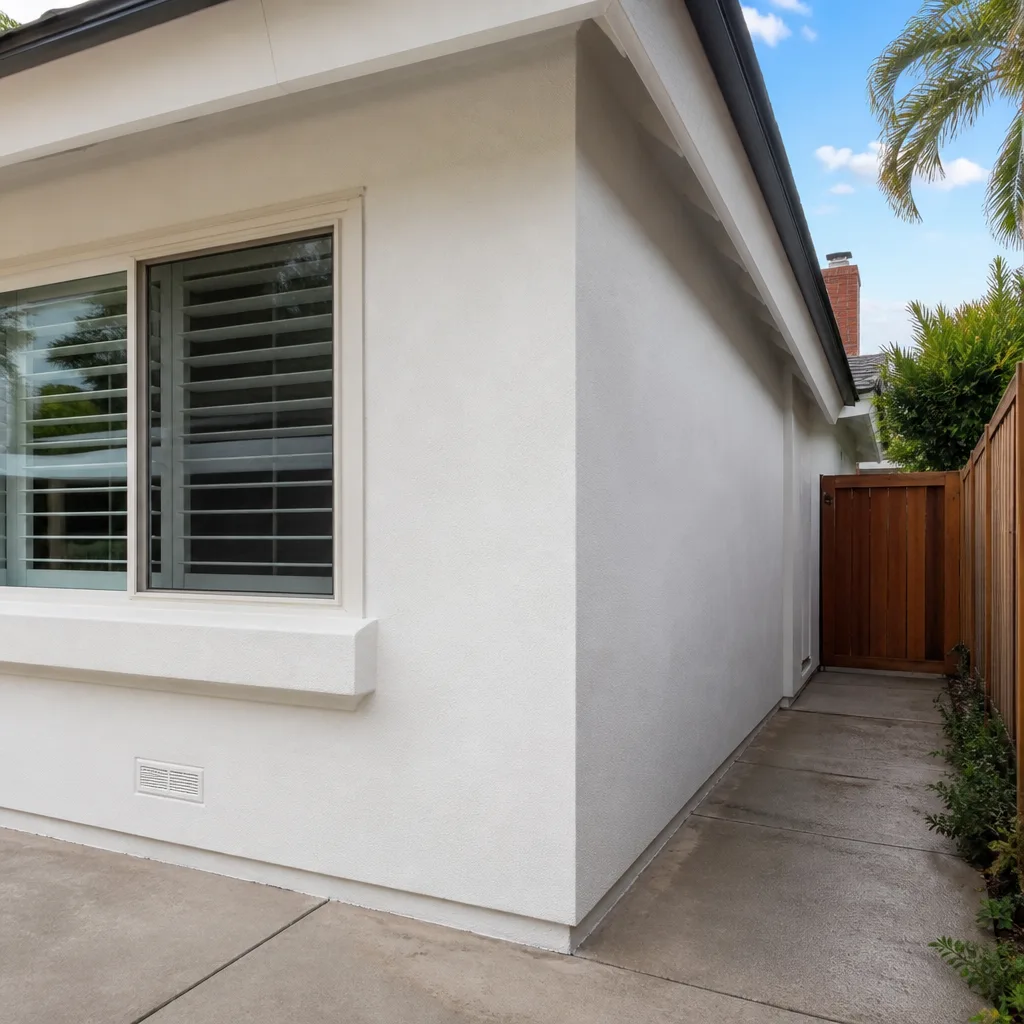 After
After24/7 Emergency Water Damage Restoration in Spring Valley
Water damage restoration in Spring Valley typically costs $2,800-$6,500 for a standard residential extraction and drying job, with emergency calls answered live at (619) 330-9541 every hour of every day. Our crews dispatch from the El Cajon staging area and reach Spring Valley properties in under 45 minutes, carrying Dri-Eaz and Phoenix dehumidifiers, Injectidry cavity-drying systems, and thermal imaging cameras on every truck. The first hour determines whether moisture stays in the carpet and drywall or migrates into subfloors, wall cavities, and the post-WWII ranch-style framing that dominates Spring Valley’s housing stock. We don’t guess. We map moisture, classify the water category, and deliver a written scope with a firm price before any equipment runs - Haven Standard, Clause 1.
Understanding Water Damage Restoration Severity in Spring Valley Properties
Water damage breaks into three categories under IICRC standards, and getting the classification wrong in Spring Valley carries consequences that coastal San Diego jobs rarely face. Category 1 is clean water from a burst supply line or overflowing sink. Category 2 carries significant contamination - dishwasher discharge, washing machine overflow, or groundwater seepage. Category 3 is grossly contaminated: sewage backup, flooding from Sweetwater River tributaries, or any water that has passed through ground or building materials.
Here’s where Spring Valley diverges from every other market in San Diego County. The community’s canyon-edge and acreage properties frequently operate on private septic systems rather than municipal sewer connections. A burst pipe in a Casa de Oro workshop or a Sweetwater Road ranch home can quickly become a category 3 event if the intrusion involves septic-line backflow. Misclassify that water and you dry sewage-contaminated framing illegally, exposing occupants to pathogens and voiding any insurance coverage for the remediation.
Moisture mapping with thermal imaging and calibrated hygrometers tells us the migration path. Psychrometric data - temperature, relative humidity, and vapor pressure differential - tells us how fast we can dry without secondary damage. Tertiary drying, the final phase where hidden moisture in dense materials gets extracted, is where most franchise crews pack up too early and leave mold food behind. We document every reading to the IICRC S500 standard, because your adjuster will ask for it.
Why Spring Valley Property Owners Choose DryMark Restoration San Diego
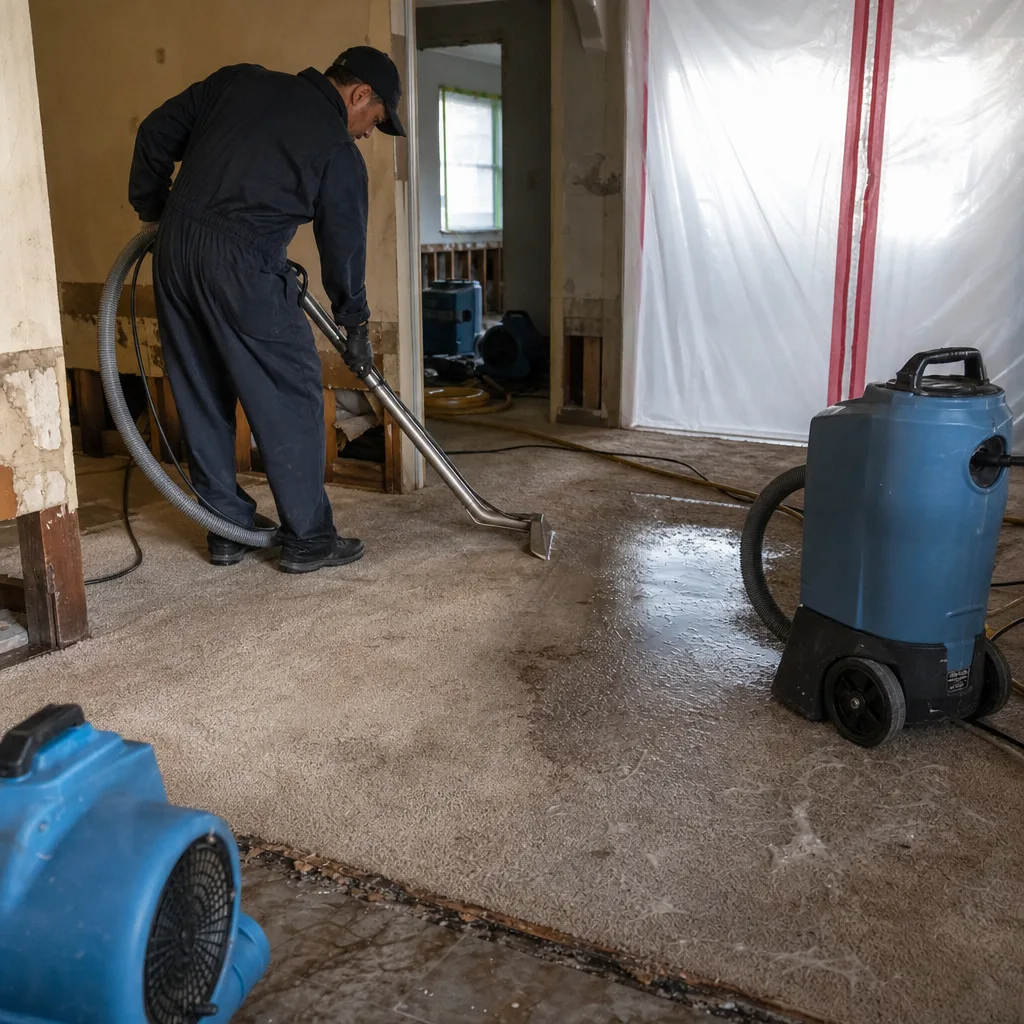
- 45-minute response commitment to Spring Valley addresses, with crews staged in El Cajon and equipped for same-day extraction and drying setup.
- 24/7 live answer - a real person picks up every call, never an automated system or voicemail tree, because water doesn’t wait for business hours.
- IICRC-certified crews holding WRT (Water Damage Restoration Technician) and AMRT (Applied Microbial Remediation Technician) credentials, with license numbers documented on every job file.
- Free visual inspection and moisture assessment, delivered with a written scope and firm price before any work begins - Haven Standard, Clause 1.
- Direct insurance billing and adjuster coordination, with photo-documented drying logs that turn restoration invoices into payable claims.
- One team from extraction through reconstruction - no handoffs between mitigation and rebuild contractors that delay permit closure.
BeforeAfterOur Water Damage Restoration Process
Inspection & Assessment
We arrive with thermal imaging cameras, penetrating and non-penetrating moisture meters, and hygrometers to map the full extent of migration. On Spring Valley’s 1950s-1970s ranch homes, we check for asbestos-containing floor tile, duct insulation, and popcorn ceilings before any demolition - hazmat abatement must clear before restoration work can legally begin, per San Diego County requirements.
Extraction & Stabilization
Standing water comes out first with truck-mounted extraction systems and portable submersible pumps. We identify the water category on-site - critical in Spring Valley, where private septic systems on canyon-edge lots can upgrade a seemingly clean supply-line break to category 3 without visible warning.
Drying & Dehumidification
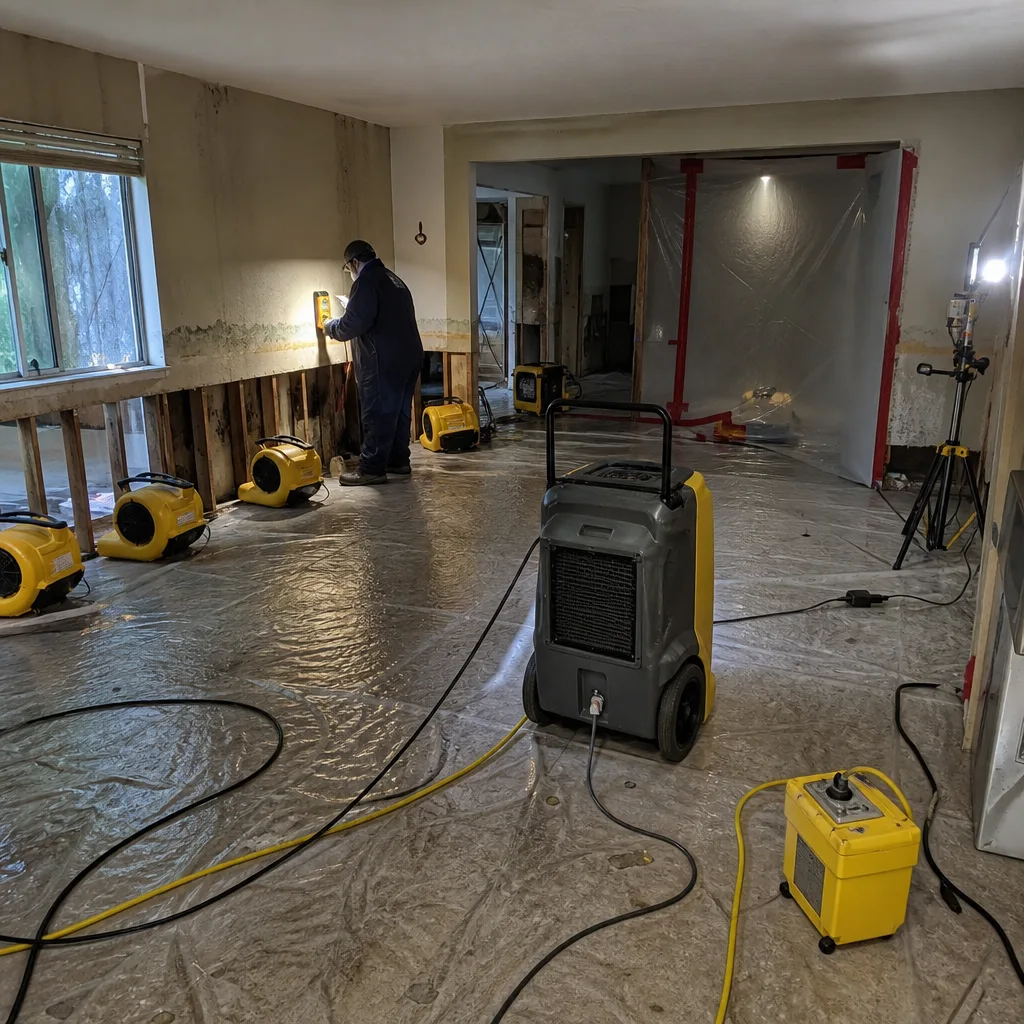
We deploy Dri-Eaz and Phoenix LGR dehumidifiers, XPOWER and B-Air axial air movers, and Injectidry hardwood and cavity-drying systems to establish vapor pressure differential and pull bound moisture from structural materials. Daily moisture logs track progress to IICRC S500 dry standards.
Cleaning & Sanitization
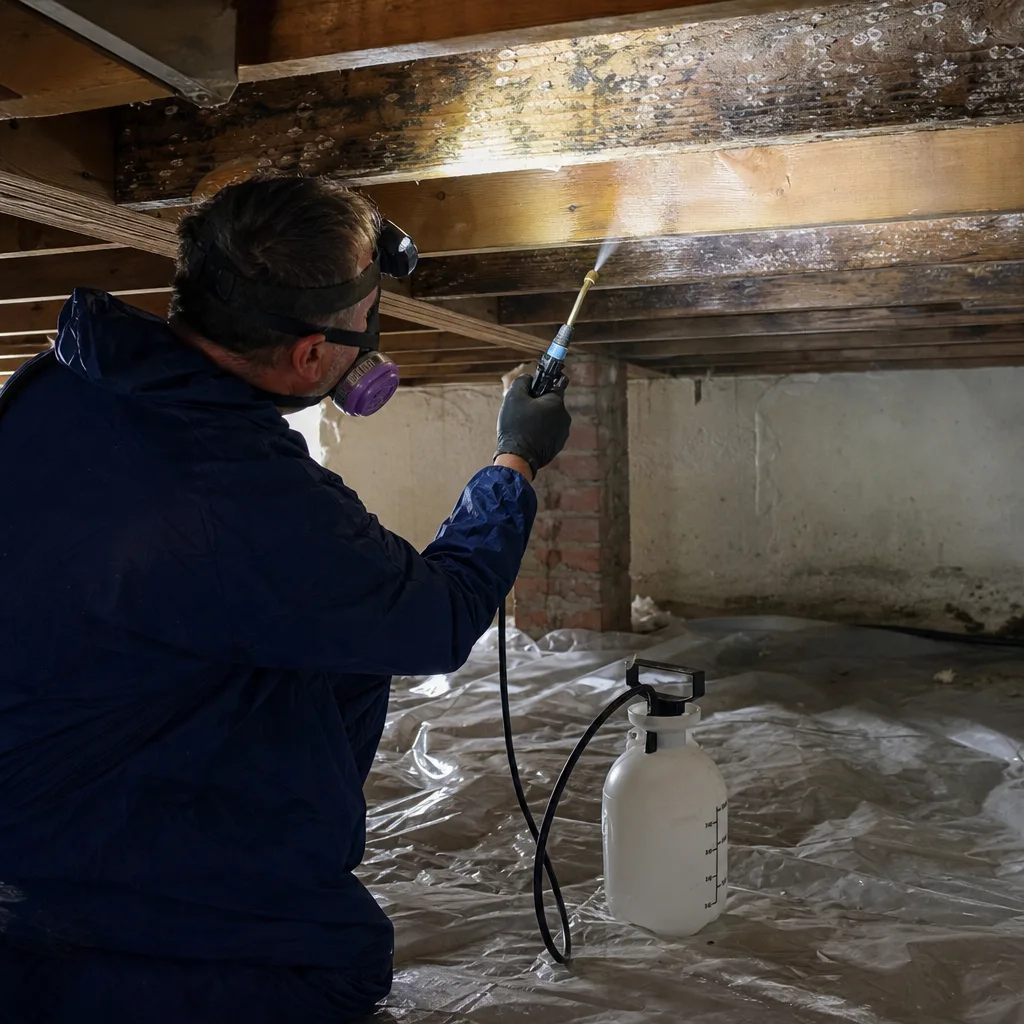
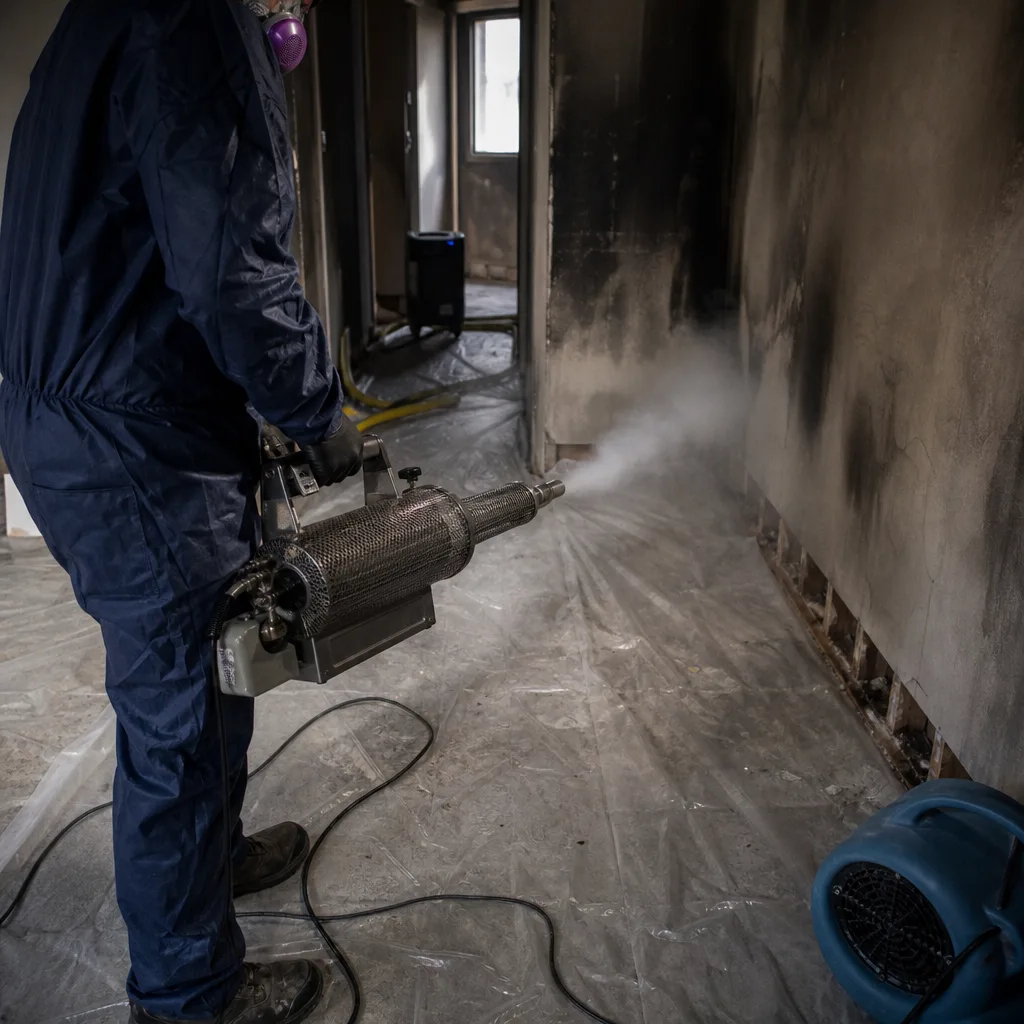
All affected surfaces receive antimicrobial treatment appropriate to the water category. Category 3 jobs require EPA-registered disinfectants and full personal protective equipment. We document application with time-stamped photos for your claim file.
Asbestos & Hazmat Clearance
Spring Valley’s post-WWII housing stock means asbestos abatement precedes demolition on most significant jobs. We coordinate with county-licensed abatement contractors and hold the restoration phase until San Diego County Planning & Development Services clears the hazard - a step no coastal tract home requires.
Repairs & Restoration
Once drying hits specification and hazmat clears, our reconstruction crew rebuilds to pre-loss condition. Permits route through San Diego County’s Department of Planning & Development Services, not a municipal building department - different inspectors, different timelines, and relationships we’ve built since 2011.
Need Emergency Water Damage Restoration in Spring Valley Now?
Crews minutes away, answering live 24 hours a day. The sooner we start, the less it costs.
Working With Your Insurance Company
Insurance claims succeed or fail on documentation. We know this because Alicia Brennan founded Back to Dry Restoration in 2011 after years as a claims adjuster watching homeowners lose coverage over missing photos, undocumented moisture readings, and scopes that didn’t match the invoice. Every Spring Valley job we handle produces a claim file that speaks adjuster language from hour one.
Our crew chief photographs every room before touching anything. Moisture readings go into a daily drying log with equipment placement maps and psychrometric calculations. The written scope lists every line item by trade standard, not vague categories. When your adjuster calls, we answer with data they can file - not promises they can’t verify. Direct billing to most major carriers means you’re not floating thousands in restoration costs while paperwork clears.
What We Provide Your Insurer
- Thorough documentation of the loss
- Photos of all damage, room by room
- Moisture readings and drying logs
- A detailed, line-item scope of work
- Direct coordination with your carrier
Built for Spring Valley’s Loss Calendar
Spring Valley’s inland position, just a few miles from the coast but climatically distinct, creates a damage profile no coastal San Diego community shares. Summer brings temperatures above 95-100°F with single-digit humidity and severe Santa Ana wind events that drive wildfire ignition through surrounding canyons. When fall rain finally arrives, burned and hydrophobic soil sheds water instead of absorbing it, concentrating runoff into Sweetwater River tributaries and steep canyon drainages. The result: flash flooding and mud intrusion into low-lying neighborhoods, particularly along Campo Road and the Sweetwater corridor, that generates concentrated water damage calls each wet season.
Winter atmospheric rivers compound the problem. Saturated hillsides slump. Older ranch homes with original galvanized supply lines, now sixty-plus years old, fail at joints stressed by decades of mineral buildup. Basement water removal calls spike in January and February, often from homes that haven’t seen standing water in twenty years.
Spring and early summer bring a different pattern: irrigation system overpressure, failed water heaters in original utility closets, and the first air conditioning condensate line clogs of the season. Each season demands different equipment deployment and different moisture migration expectations. We’ve logged them all since 2011.
Water Damage Restoration Across Spring Valley’s Neighborhoods
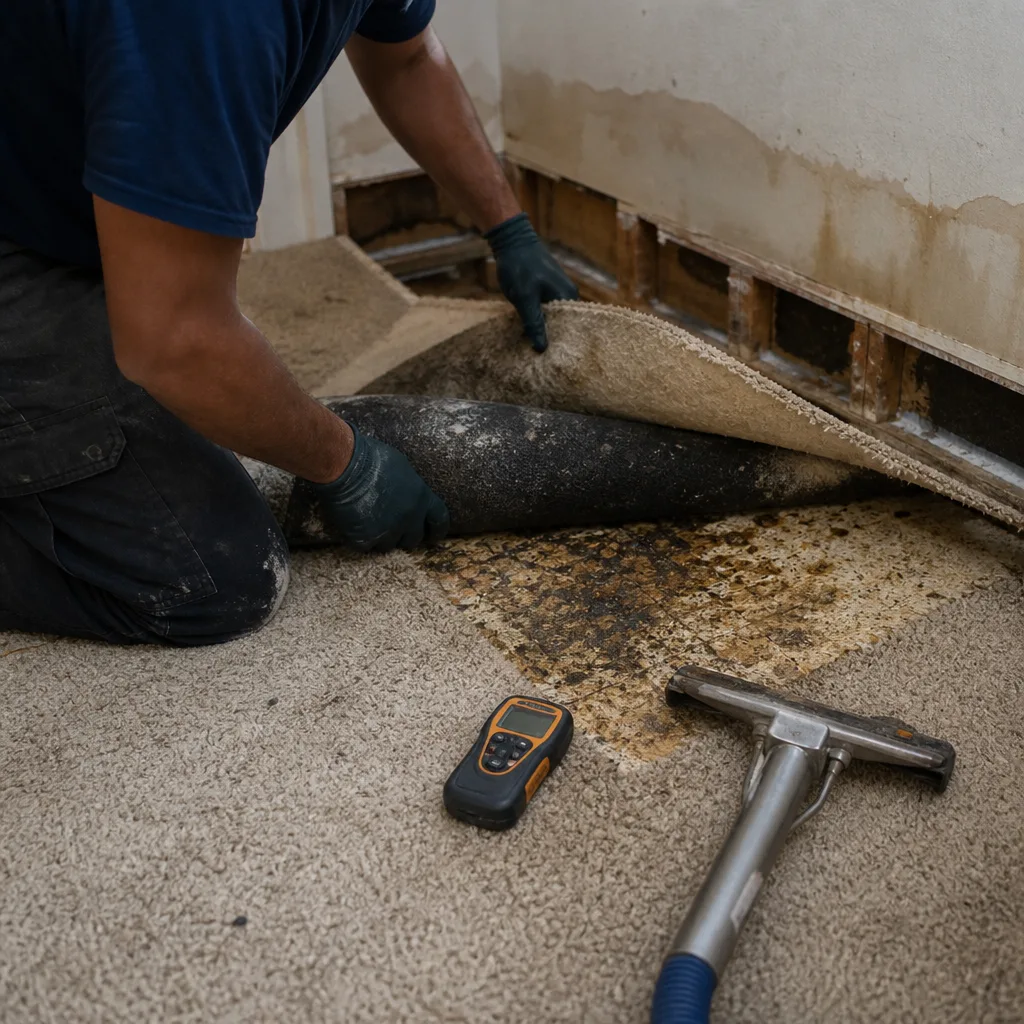
In Casa de Oro, canyon-edge properties on acreage lots present the full complexity profile: private septic systems, detached workshops with slab-on-grade construction, and 40-minute drives from our nearest staging. A burst supply line under a workshop slab here doesn’t just wet concrete - it soaks the bottom plate of any steel door frame, wicks into stud bays, and potentially introduces septic contamination if the break occurs near the drain field. We run moisture mapping first, confirm water category before demolition, and bring enough equipment to complete extraction and initial drying setup in one trip. Two trips waste half a day on these roads.
Sweetwater Village and the Campo Road corridor sit lower in the drainage, catching flash flood runoff from canyon neighborhoods above. Water damage here is often category 2 or 3 from the start - muddy, debris-laden, carrying whatever the flood picked up on its way down. Extraction takes longer. Sanitization is non-negotiable. And because these are 1960s-1970s tract homes, asbestos floor tile and duct insulation are probable, not possible.
La Presa properties, particularly the hillside streets above Sweetwater Reservoir, see a different pattern: supply line failures in original copper or galvanized plumbing, with water running downhill through multiple floors before anyone notices. By the time we arrive, moisture has migrated through subfloors into ceiling cavities below. Thermal imaging finds the full extent. Injectidry systems dry the cavities without tearing out finished surfaces that don’t need removal.
Near Bancroft Drive and the flatter sections closer to state Route 125, homes connect to municipal sewer and present a more standard water damage profile. Even here, though, the 1950s-1970s construction vintage means we check for asbestos before cutting into any wall or ceiling that predates 1980.
Specialized Water Damage Restoration Services We Offer in Spring Valley
Emergency Water Extraction
Standing water compounds by the hour. Our truck-mounted extraction systems remove thousands of gallons per hour, with portable submersibles for crawl spaces and basement water removal where access limits equipment size. On Spring Valley acreage properties, we size the crew to the job - a flooded 2,000-square-foot ranch needs different deployment than a 400-square-foot detached workshop with a slab leak.
Structural Drying & Dehumidification
Drying to IICRC S500 standards requires more than parking dehumidifiers and hoping. We calculate the cubic footage of affected space, the porosity of wet materials, and the vapor pressure differential needed to move moisture from structure to air to machine. Dri-Eaz and Phoenix LGR units pull moisture at low grains, critical in Spring Valley’s summer heat when high ambient temperatures can fool standard refrigerant dehumidifiers into shutting down prematurely.
Flood Cleanup
Flood damage from Sweetwater River tributaries, canyon runoff, or atmospheric river overflow carries category 2 or 3 classification from contact. We extract, remove contaminated porous materials per EPA guidelines, sanitize with registered disinfectants, and document every step for your adjuster. Spring Valley’s unincorporated status means debris disposal and environmental compliance route through San Diego County channels, not municipal waste systems.
Burst Pipe Restoration
Galvanized supply lines in Spring Valley’s post-WWII housing stock fail at joints, at threaded connections, and where decades of mineral buildup has reduced flow diameter to a trickle. We extract the water, dry the structure, and coordinate with licensed plumbers for the repair - then rebuild any removed finishes to match.
Basement Water Removal
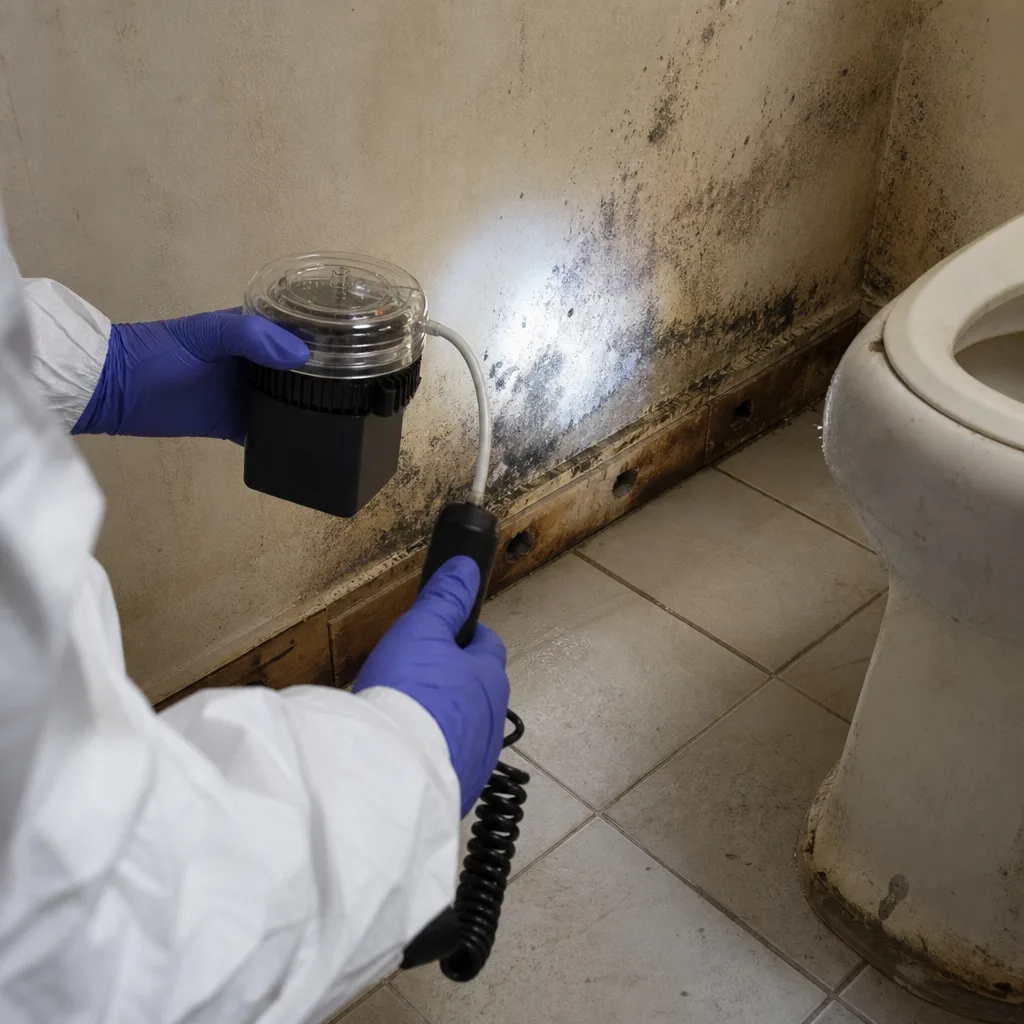
Spring Valley’s older ranch homes with partial basements or excavated crawl spaces see seasonal water intrusion through foundation cracks, failed perimeter drains, and hydrostatic pressure during wet winters. Basement water removal requires submersible pumps, cavity drying for rim joists, and careful monitoring for mold proliferation in the dark, humid conditions that persist below grade.
Ceiling & Roof Leak Water Damage
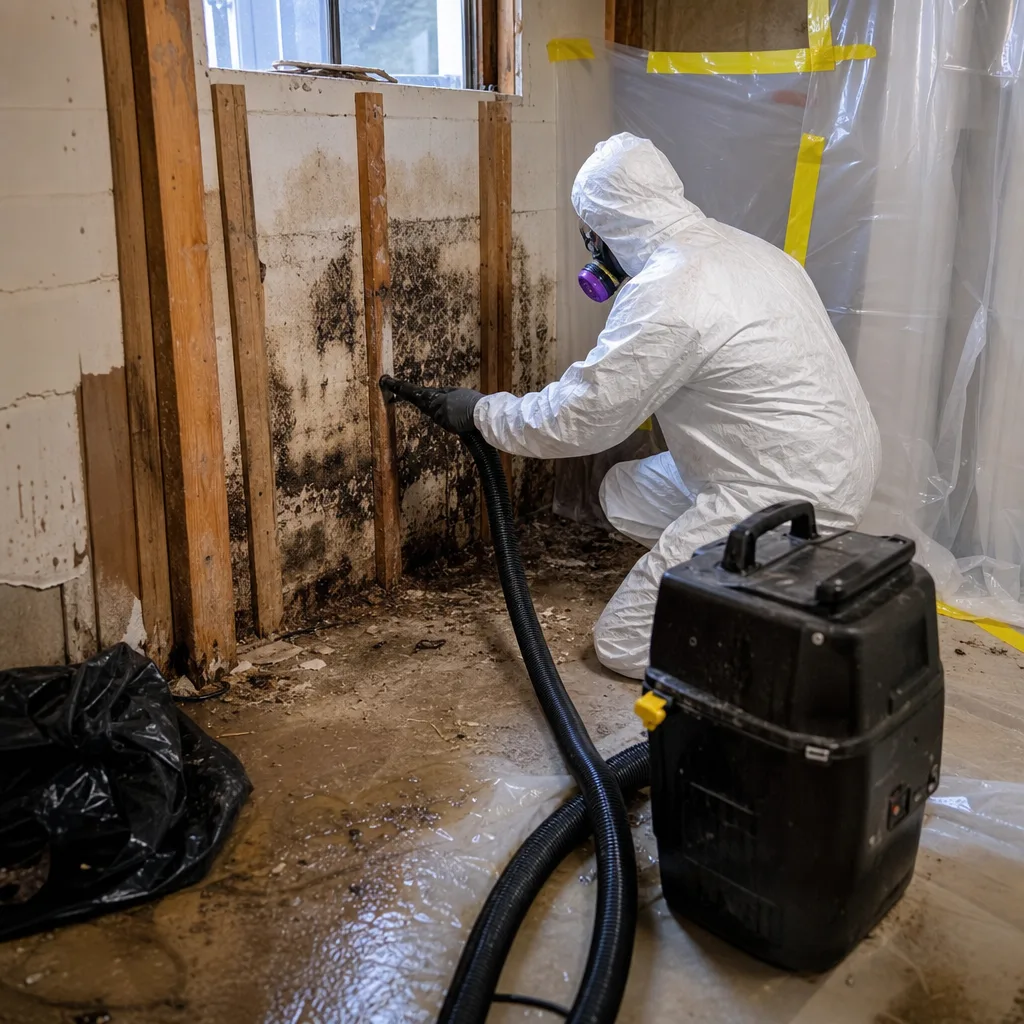
Santa Ana wind events damage roofing and flashing, particularly on older structures with original construction. Water follows rafters and can travel far from the entry point before showing as ceiling stain. Thermal imaging traces the path. We dry the cavity, replace damaged drywall, and match texture - including the popcorn ceilings common to Spring Valley’s 1960s-1970s vintage, provided asbestos testing clears first.
What happens when you call
- 1
A real person answersNo phone trees - you reach a local pro.
- 2
You get an upfront price rangeHonest numbers before anyone is dispatched.
- 3
A background-checked tech heads outLicensed & insured, dispatched right away.
- 4
You approve before work beginsNothing starts until you say go.
Water Damage Restoration Costs in Spring Valley, CA
A typical emergency water extraction and structural drying job in Spring Valley runs $2,800-$6,500 for residential properties up to 2,500 square feet. Category 1 supply-line breaks at the lower end, category 2-3 flood or sewage jobs at the higher end. Basement water removal with submersible pumping and extended cavity drying adds $800-$1,800. Asbestos abatement, required on most pre-1980 demolition, runs $1,200-$3,500 depending on material type and square footage - a cost coastal San Diego tract homes rarely incur.
What moves the price: water category (clean vs. contaminated), affected square footage, whether asbestos or lead paint requires hazmat clearance, and whether the property sits on a private septic system that complicates contamination assessment. Jobs in La Mesa or Chula Vista often cost less because they’re municipal-sewer, incorporated-city projects with simpler permitting and no abatement on newer construction.
Insurance typically covers sudden and accidental water damage from burst pipes, appliance failures, and storm intrusion. Gradual leaks, maintenance neglect, and flood damage from rising surface water require separate flood coverage. We review your policy implications during the free inspection and deliver a written scope with a firm price before any work begins - Haven Standard, Clause 1. Call (619) 330-9541 for your free assessment.
We Also Serve Cities Near Spring Valley
Our crews respond daily to Water Damage Restoration in Spring Valley and surrounding communities: La Mesa to the northwest, El Cajon to the northeast, Bonita to the south, and National City to the west. Each city carries different permitting pathways - municipal departments for incorporated La Mesa and El Cajon, San Diego County for unincorporated Spring Valley and Bonita - and we route every job through the correct jurisdiction from day one.
Serving Spring Valley, CA - Our Local Coverage Area
We’re based in the Spring Valley area and know this community well. Use the map below to see our service coverage - if you’re nearby, we can almost certainly help.
Spring Valley Water Damage Restoration Questions, Answered
Why does a water damage job in Spring Valley often cost more than the same job in La Mesa or Chula Vista?
Spring Valley’s unincorporated status, older housing stock, and canyon-edge septic systems add scope that incorporated coastal cities rarely face. Asbestos abatement on pre-1980 materials, county-level permitting through San Diego County Planning & Development Services, and category 3 water classification from septic backflow all add legitimate cost. A La Mesa job on municipal sewer with post-1990 construction skips these steps. Call (619) 330-9541 for a free inspection and written price specific to your property.
Can wet septic-line water in a Spring Valley canyon-edge home be dried in place?
No. Water that has contacted a septic system is category 3 grossly contaminated water under IICRC standards. Porous materials - carpet, pad, drywall, insulation, particle board - must be removed and disposed of as regulated waste. Non-porous materials can be sanitized with EPA-registered disinfectants after thorough cleaning. Drying category 3 materials in place violates health standards and voids insurance coverage. We classify on-site with moisture mapping and documented testing before any demolition begins.
How fast do you need to start drying water damage in a Spring Valley home with 100°F summer heat?
Within the first four hours, ideally sooner. High temperatures accelerate microbial growth - mold colonization can begin in 48-72 hours, but at 95-100°F with residual moisture, that window compresses significantly. Summer heat also increases evaporation rate, which seems helpful but actually drives moisture deeper into cooler wall cavities and subfloors where it hides from surface drying. We deploy thermal imaging immediately to find these migration paths and size dehumidification to the actual load, not the apparent surface wetness. Call (619) 330-9541 for immediate dispatch.
Does Spring Valley’s wildfire zone affect how you handle a water damage call?
Indirectly but meaningfully. Properties in the Very High Fire Hazard Severity Zone often have hardened exterior features - metal roofing, fire-resistant siding, fewer windows - that alter ventilation and drying strategy. More significantly, recent fire history in the surrounding canyons means hydrophobic soil that sheds rather than absorbs rainfall, concentrating flash flood runoff into low-lying Spring Valley neighborhoods during winter storms. We assess recent burn scar proximity and soil conditions when predicting secondary flood risk during the drying phase. For your specific property assessment, call (619) 330-9541.
What is involved in a one-trip water damage response to a Spring Valley acreage property with a detached workshop?
We load for the full scope: truck-mounted extraction, portable submersibles for slab access, thermal imaging and moisture meters, LGR dehumidifiers sized to cubic footage, air movers, and Injectidry cavity systems for any wall framing contact. We confirm septic or sewer service before arrival to classify water correctly. In the Casa de Oro canyon-edge area off Sweetwater Road, a burst supply line under a detached workshop flooded the slab and soaked the bottom plate of a heavy steel door frame; because the lot still runs on a private septic system and the shop sits on unincorporated county acreage, we pulled the Dri-Eaz and Phoenix dehumidifiers in and ran moisture mapping first to confirm the intrusion was category 1 before any demolition, then set containment and finished with antimicrobial treatment on the affected framing - all in one trip, which matters when the drive is 40 minutes from our El Cajon staging. For acreage properties, call (619) 330-9541 and mention the access details.
Will my insurance cover water damage restoration in Spring Valley?
Sudden and accidental water damage from burst pipes, appliance failures, and storm intrusion is typically covered under standard homeowners policies. Flood damage from rising surface water, including Sweetwater River tributary overflow, requires separate flood coverage. Gradual leaks and maintenance-related damage are usually excluded. We document the cause, timeline, and extent with photos and moisture logs that satisfy adjuster requirements, and we bill most major carriers directly. Bring any competitor’s written estimate for our free second opinion - Haven Standard, Clause 1 applies to every scope we write. Call (619) 330-9541 to start your claim documentation.
How long does structural drying take in a typical Spring Valley home?
Three to five days for standard residential water damage, longer for dense materials, significant category 3 contamination, or properties with post-WWII plaster and lath construction that holds moisture differently than modern drywall. We measure daily with calibrated moisture meters and hold equipment until readings reach IICRC S500 dry standards - typically 12-16% moisture content for wood framing, lower for hardwood floors. Rushing the schedule leaves hidden moisture that becomes mold. Your daily drying log shows exactly where we stand. For a timeline specific to your loss, call (619) 330-9541.
Can we stay in our Spring Valley home during water damage restoration?
Sometimes, depending on water category, affected areas, and whether asbestos abatement is required. Category 1 damage contained to a single room often allows occupancy with equipment running. Category 2-3 contamination, whole-house drying with multiple loud dehumidifiers and air movers, or active asbestos abatement typically requires temporary relocation for health and safety. We assess this during the initial inspection and include occupancy recommendations in your written scope. If displacement is necessary, we document the additional living expense for your adjuster. Call (619) 330-9541 to discuss your specific situation.
Our Water Damage Restoration team serves Spring Valley with the documentation-first approach that turns restoration invoices into payable claims. Every job starts with a free inspection, a written price, and a photo record that continues through final walkthrough. The 365-Day Done Right Promise backs every scope we execute - if it’s not done right, we make it right, under The Haven Standard.
Written by Alicia Brennan, Owner at Back to Dry Restoration, serving Spring Valley since 2011.
Water Damage Restoration in Nearby Areas